Waterloo & Laurier Student Carpools: Hwy 401 Co-op Guide
TL;DR
- Connect University Avenue in Waterloo to the GTA via Highway 85, Highway 8, and provincial Highway 401 carpool parking lots.
- Combine GO Transit rail or bus corridors with FellaRide carpools to reach suburban co-op office parks without downtown transfers.
- Split campus parking permits and fuel fairly under Ontario non-commercial rules using FellaRide's $5 minimum and $0.20/km guideline.
- Verify your student profile via Persona and join up to 5 Trusted Groups for your campus and co-op business corridors.
- Use ION light rail stations and Highway 401 interchange lots as central pickup hubs to avoid slow residential detours.
Learn more about FellaRide
What you need
Commuting between Waterloo Region and the Greater Toronto Area for academic terms, weekend visits, or four-month co-op placements requires advance preparation. Before you organize your weekly highway routine, gather these essentials to compare transit times, parking rules, and carpool matches accurately.
- Your finalized schedule: Write down exact lecture start times, lab hours, or co-op shift windows so you can match departure blocks.
- A PRESTO card: Useful for paying regional transit fares on GO Transit buses and trains when you need a single-trip backup.
- A FellaRide account: Open to adults aged 18 or older on iOS and Android for joining campus and workplace communities.
- A government-issued ID: Required if you complete optional identity verification through Persona to earn a profile trust badge.
- 15 minutes of planning time: Enough to review your highway interchange options and campus parking lot locations before the term starts.
1. Map Your Waterloo and Laurier to GTA Corridor on Highway 401 and Highway 8
Travelling between University Avenue in Waterloo and the western edges of the Greater Toronto Area puts you on one of Ontario's busiest highway funnels. Most student commuters exit the campus district along Highway 85 and Highway 8 before merging eastbound onto Highway 401 toward Milton, Mississauga, Brampton, or Toronto.
Because high commuter density along the Waterloo to Toronto corridor creates plenty of overlapping student and co-op trips, matching a ride is much easier when you map your exact ramps first.
Instead of asking a Host to weave through student housing crescents near Columbia Street or Ezra Avenue, plan your route around major arterial connectors.
The province operates free carpool parking lots near highway interchanges across Ontario so commuters can park extra vehicles and merge onto the highway in a single car. Most of these lots allow free parking for up to five consecutive days, provide overhead lighting, and sit right beside Highway 401 entry ramps.
Key highway junctions and staging points along the Waterloo Region and western GTA corridor include:
- University Avenue & Highway 85: The primary northern expressway entrance serving both the University of Waterloo and Wilfrid Laurier University campuses.
- King Street / Sportsworld Drive (Highway 8): The main southern funnel linking Conestoga Parkway to the Highway 401 ramp network in Kitchener.
- Homer Watson Boulevard (Exit 275): A western Kitchener Highway 401 interchange useful for students living near Doon or west Waterloo.
- Highway 6 South / Morriston (Exit 299): A convenient eastern staging junction where Guelph and Waterloo Region traffic converges toward Halton.
- Highway 25 / Milton (Exit 320): A major gateway into Peel and Halton for co-op students heading toward suburban corporate parks.
Sharing a vehicle requires aligning both your departure time and your highway corridor. If an afternoon lab runs late or a co-op team meeting stretches past 5:00 p.m., a shared car offers less spontaneous flexibility than driving solo, so always identify a transit backup or a flexible return partner before you leave.
2. Compare GO Bus Routes, Kitchener GO Trains, and Highway 401 Campus Carpools
Evaluating your weekly schedule leg by leg rather than treating every weekday identically helps you spot where regional transit works and where transfers slow you down.
As explained in our GTA university commuter guide on transit versus campus carpools, many post-secondary students travel during off-peak windows when suburban feeder routes operate less often. Writing down the full door-to-door time for each trip shows you whether a bus transfer across municipal borders adds hours to your week.
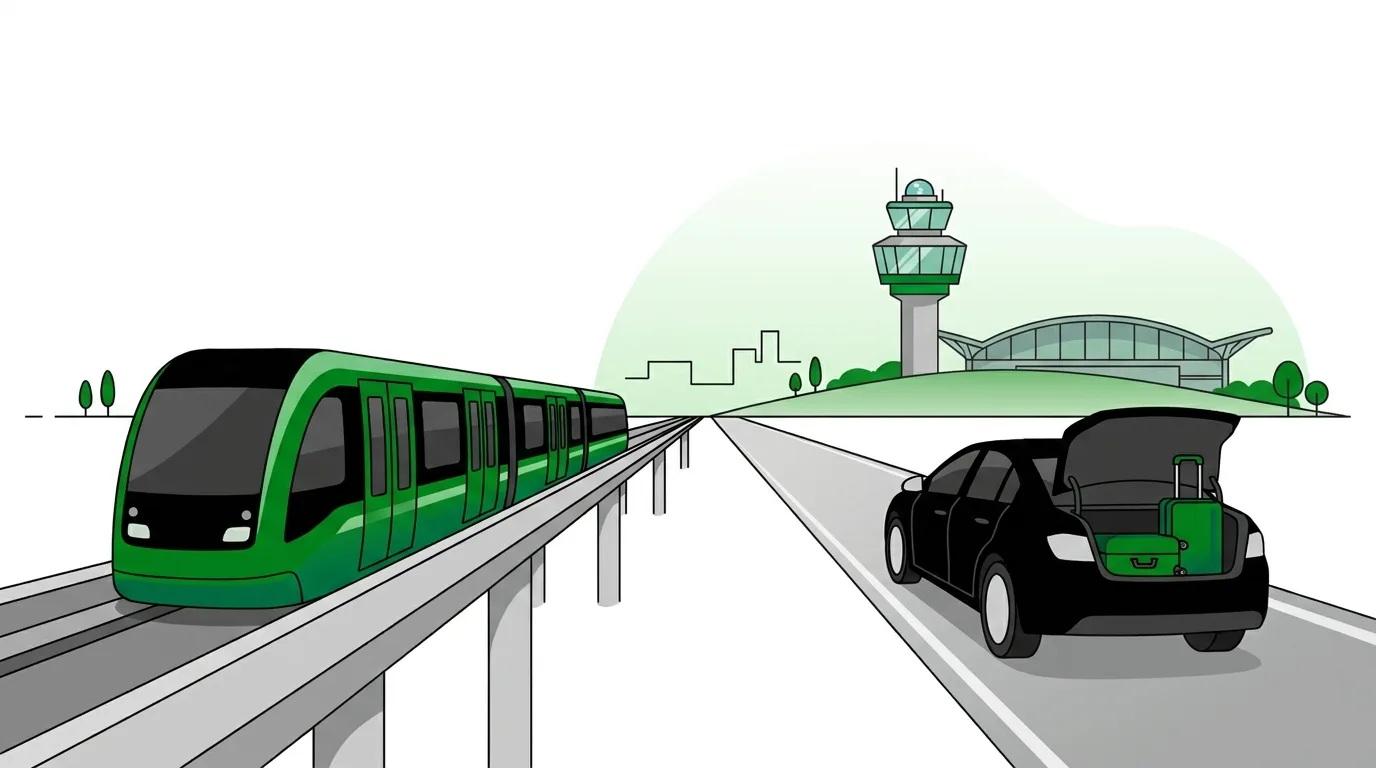
Peer-to-peer ride sharing works alongside regional rail and bus networks rather than replacing them. Fixed transit lines move thousands of riders efficiently into major terminals like Union Station, where the Kitchener GO line connects downtown Toronto to western corridor stops.
However, co-op placements in suburban office parks across Mississauga, Markham, or Brampton often suffer from a first-mile and last-mile gap that requires multiple local bus transfers after stepping off a regional train or highway coach.
Reviewing our breakdown of app-based carpooling pros and cons for GTA commuters helps you weigh fixed rail departures against shared highway drives.
When your destination sits in a suburban business park away from a rail terminal, sharing a direct highway ride bridges the gap without routing through downtown Toronto first. Plus, carrying at least two people in a vehicle unlocks Ontario's High Occupancy Vehicle (HOV) lanes on series 400 highways like Highway 403, Highway 404, and the QEW once you enter the GTA.
Tip: Agree on your pickup window and cost split before the first trip so everyone's commute stays predictable.
3. Coordinate Term Parking Lots on University Avenue and Split Costs Under Ontario Rules
Leaving a vehicle on campus every day adds significant cost to an academic semester. Outer surface lots across the University Avenue corridor at the University of Waterloo and permit tiers at Wilfrid Laurier University make solo daytime parking an extra budget item. Sharing a single permit vehicle among three or four roommates or corridor peers immediately cuts what each student pays at the lot gate.
When you split fuel and parking costs with classmates, your arrangement must stay within provincial rules for a private, non-commercial carpool. As detailed in our guide to how non-commercial carpooling works in Ontario, the legal boundary rests on Host intent and strict expense recovery.
In a genuine carpool, the Host already has a personal reason to drive to campus, a co-op office, or home for the weekend, and Guests simply reimburse a fair portion of actual operating costs.
To keep every highway trip compliant with Ontario's non-commercial carpool framework, verify that your group follows four rules:
- Shared origin and destination: The Host and Guests travel between a common starting area and destination as part of the Host's own planned commute.
- Cost recovery without profit: Contributions cover actual travel expenses only, with zero profit margin or commercial commission.
- Incidental daily frequency: Trips follow a normal commute rhythm, typically one round trip per day between home and campus or work.
- Standard Class G licensing: Because the shared ride is non-commercial, the Host drives under a standard Ontario Class G licence rather than a commercial permit.
FellaRide operates as a technology marketplace connecting Hosts and Guests for private cost-sharing rather than acting as a transportation carrier. To keep calculations simple and consistent with Canadian norms, FellaRide sets a recommended minimum contribution of $5 per trip (covering multi-leg rides and stops) alongside a $0.20/km guideline rate so Hosts can recover shared vehicle expenses fairly.
4. Join Verified Campus and Workplace Trusted Groups for Co-op Terms on FellaRide
Searching anonymous social media boards or unmoderated message threads for a Friday ride down Highway 401 often feels uncertain because you cannot verify who is behind the account. As highlighted in our GTA student carpooling guide, organizing shared rides inside a closed, verifiable campus or workplace community builds mutual accountability before anyone steps into a car. Fellow students and co-op peers understand midterm schedules, campus drop-off lots, and student budgets.
Watch out: Never send upfront e-transfers to unverified posters on public social media boards before you confirm their identity and exact route details inside a trusted platform.
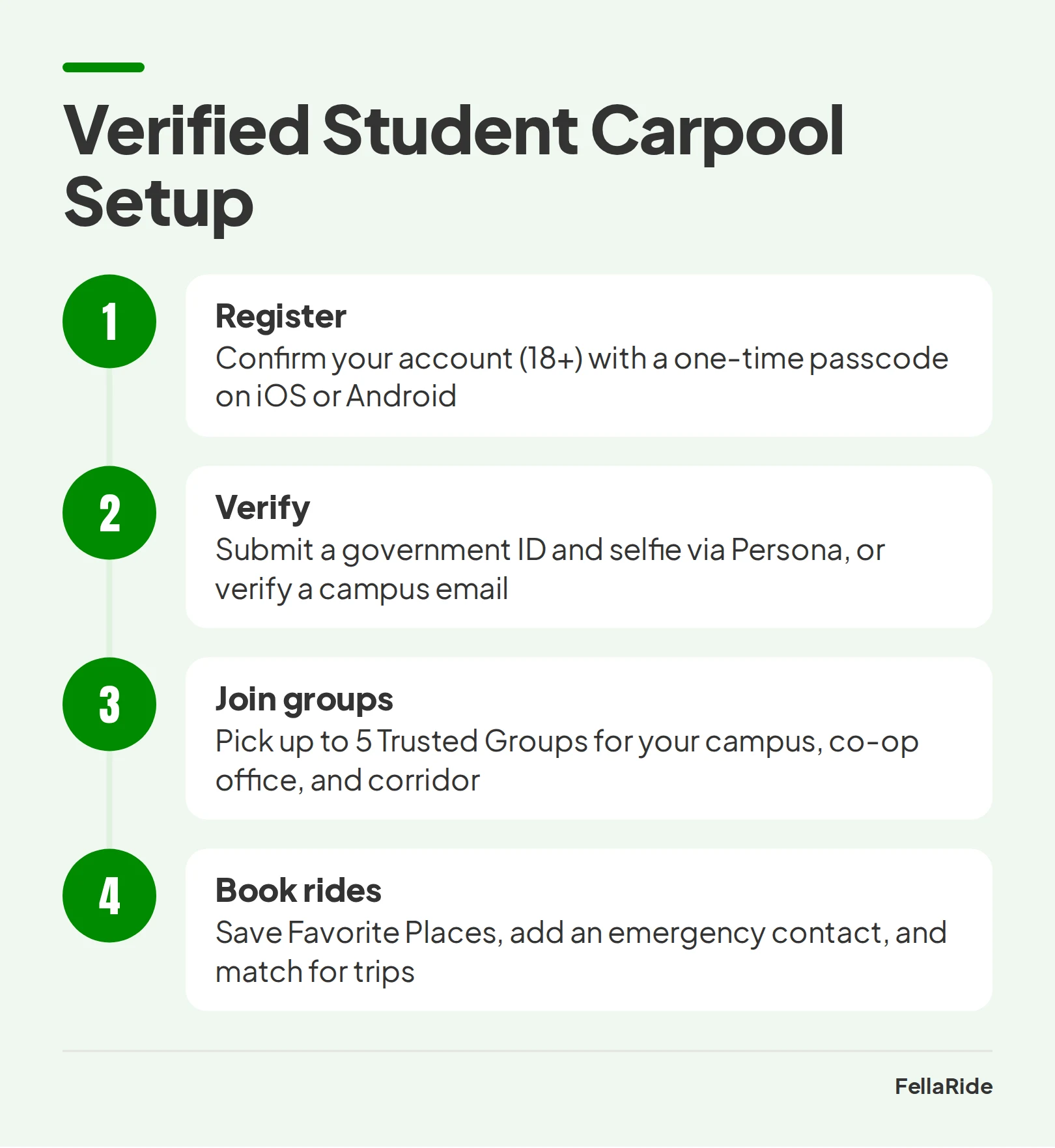
On FellaRide, a Trusted Group is a private or semi-private community organized around a shared campus, employer, or neighborhood. Follow these four steps to set up your verified student profile and match for academic or co-op rides:
- Register with an OTP: Download the FellaRide app on iOS or Android, enter your name, email address, and phone number, and confirm your account via a one-time passcode. All users must be 18 or older.
- Complete Persona verification: Submit a government ID and selfie through Persona for third-party identity and liveness verification, or verify an organizational email domain. FellaRide keeps only your verification status and expiry dates rather than your raw ID files, awarding a profile badge that builds trust.
- Join up to 5 Trusted Groups: Because FellaRide caps each user at a maximum of 5 communities (and limits total group size to preserve quality), select communities that match your home corridor, campus, and co-op office park.
- Configure Favorite Places and trips: Save your home, campus lot, or co-op office under Favorite Places to speed up booking, add your emergency contact in Account settings, and use Post a Ride, Search a Ride, or Ride Requests to lock in one-time or recurring trips.
Beyond cutting expenses at the pump, riding with three fellow students in a quiet vehicle turns highway hours into a supportive micro-community. Over a four-month term, senior students often share practical advice on rental housing, course registration, and co-op interview leads with newer classmates.
5. Lock In Convenient Pickup Hubs Along ION Light Rail and Highway 401 Interchanges
When your carpool group lives spread out across Waterloo, Kitchener, and Cambridge, the Host should never lose thirty minutes navigating narrow residential streets to collect everyone at their front door.
Selecting a clear pickup landmark right beside rapid transit keeps departure times predictable and connects local feeder trips directly to the highway. In Waterloo Region, Grand River Transit's ION light rail line links the University of Waterloo, Wilfrid Laurier area stations, downtown Kitchener, and south Kitchener retail hubs along a single rail spine.
Pairing local transit stops with highway carpool lots turns separate travel modes into a single connected network. Students comparing co-op office park programs across Peel and Halton can also read our guide on how to launch an employee carpool program in the GTA to see how suburban business parks organize shared rides.
Strategic pickup hubs along the ION corridor and Highway 401 interchanges keep student carpool departures fast and direct.
| Pickup Hub | Corridor Location | Transit & Highway Link | Why It Works for Students |
|---|---|---|---|
| University of Waterloo Station | University Ave & Phillip St | ION LRT & Hwy 85 access | Central campus loading near engineering halls |
| Laurier-Waterloo Park Station | Seagram Dr, Waterloo | ION LRT & University Ave | Walkable meetup for Laurier residence riders |
| Homer Watson MTO Carpool Lot | Hwy 401 Exit 275, Kitchener | Direct Hwy 401 ramps | Free multi-day parking for merging cars |
| Hwy 25 Milton Carpool Lot | Hwy 401 Exit 320, Milton | Hwy 401 & Halton connector | Staging point for Peel and Halton co-op rides |
| Yorkdale / Wilson Station | Hwy 401 & Allen Rd, Toronto | TTC Line 1 Subway & Hwy 401 | Direct subway handoff without downtown detours |
6. Prepare Your Highway 401 Student Carpool for Winter Weather and Exam Schedules
An early November snow squall blowing across the open farmland between Kitchener, Guelph, and Milton can quickly turn a one-hour drive along Highway 401 into a multi-hour crawl. When three or four students share a car, a sudden storm affects everyone's morning lab check-in or co-op shift start.
Following our checklist for preparing your GTA carpool for winter weather and snowstorms before winter hits helps your group agree on communication habits before temperatures drop below freezing.
Make sure your regular highway carpool group locks in these essential winter preparedness habits before the snow flies:
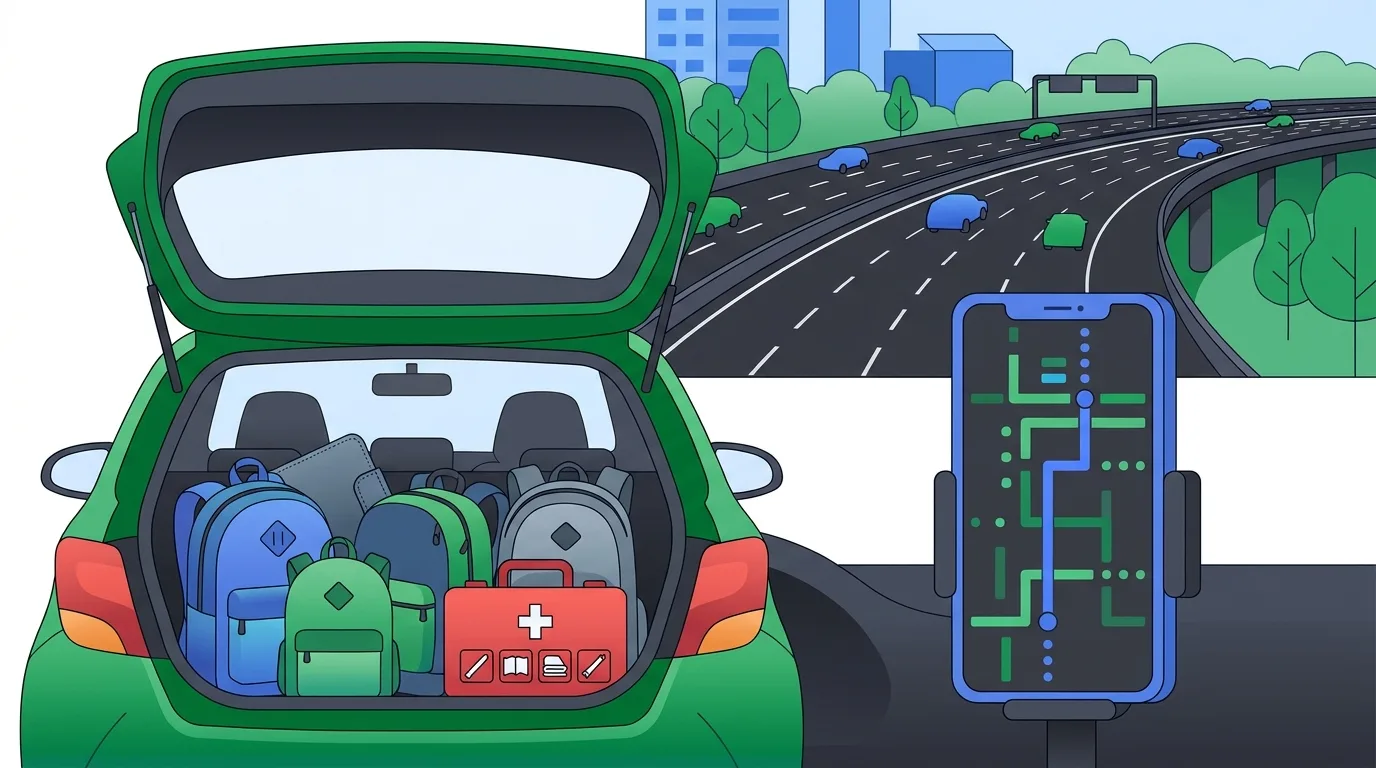
- Multi-person survival kit: Latch an emergency bin in the trunk stocked for every seat in the car, and ask regular Guests to pack spare warm gloves and thick wool socks.
- Pre-set weather departure windows: Agree on backup morning departure times so everyone knows when to leave early on yellow or red weather advisory days.
- Morning check-in deadlines: Establish a firm message confirmation cutoff the evening before and thirty minutes prior to pickup so nobody waits on a freezing corner.
- Plowed arterial pickup points: Switch pickups from unplowed student crescents to cleared main intersections or transit hubs during heavy snowfalls.
Even minor collisions or spun-out tractor-trailers on Highway 401 can trap traffic for hours. Preparing your trunk kit using the Government of Ontario winter driving checklist ensures your group carries booster cables, a shovel, and warmth supplies for all riders. Confirm your pickup landmark and waiting window inside the FellaRide app the evening before every winter trip so your academic and co-op commute stays safe and predictable.
Learn more about FellaRide
FAQ
Do student Hosts need commercial insurance or a special licence to carpool on Highway 401?
No, provided the ride meets Ontario's definition of a non-commercial carpool. When a Host travels for their own personal lecture schedule or co-op shift and Guests only reimburse a fair share of actual vehicle operating expenses without profit, the Host operates under a standard Ontario Class G licence.
How are trip costs calculated between Hosts and Guests on FellaRide?
Profit and commercial earnings are strictly prohibited on the platform so every trip remains a compliant cost-sharing carpool.
Can I schedule recurring rides for a four-month co-op placement in the GTA?
Yes, FellaRide supports both one-time and recurring ride schedules inside your communities. Hosts can use Post a Ride to publish recurring weekday trips along Highway 401, while Guests can use Search a Ride or post Ride Requests within their campus or workplace Trusted Groups.
How long can we leave an extra car parked at an Ontario provincial carpool lot?
Most provincial carpool lots in Ontario offer free parking for up to five consecutive days right beside major highway interchanges. This five-day window fits four-day lecture schedules or Monday-to-Friday co-op arrangements where students consolidate vehicles before merging onto Highway 401.
Learn more about FellaRide