Preparing Your GTA Carpool for Winter Weather & Snowstorms
Why GTA Carpools Need an Early November Winter Plan
The first November flurry across the Greater Toronto Area has a familiar habit of turning a routine 45-minute drive down the Don Valley Parkway or across Highway 401 into a two-hour crawl. When you share the ride with two or three other commuters, one squall affects everyone's schedule, childcare handoffs, and office arrival times.
Solo drivers can decide on the spot to leave 20 minutes early or work from home when freezing rain hits Peel, York, or Durham Region. A carpool group does not have that luxury without a shared playbook agreed upon before the snow starts flying.
Using early November to winterize the vehicle and align on group rules keeps everyone safe and prevents early-morning confusion at the curb. Here are the core areas your carpool group should lock in before temperatures stay below freezing:
- Vehicle traction and visibility: Dedicated winter tires, fresh wiper blades, and low-temperature washer fluid rated for highway slush.
- Highway survival gear: A trunk kit stocked for long standstills behind snowplows or jackknifed tractor-trailers on the 401.
- Flexible timing: Pre-set backup departure windows so everyone knows when to be ready on yellow or red weather mornings.
- Clear check-in deadlines: A step-by-step morning message routine so no rider is left standing on a freezing corner.
- Main-road pickup spots: Alternate meeting corners on plowed arterial streets when residential crescents are buried.
What you need
Before working through the six winter readiness steps with your fellow commuters, set aside one evening and gather a few essentials so you can finish the mechanical prep and group scheduling in a single week.
- A set of four matching winter tires: Checked for tread depth and mounted on rims, or a booked appointment at your local tire shop.
- A weatherproof trunk storage bin: Large enough to hold recovery tools, warm layers, and emergency supplies without sliding around.
- Cold-weather maintenance supplies: Sub-zero windshield washer fluid, winter-grade wiper blades, and a long-reach snow brush with an ice scraper.
- A shared group chat channel: One dedicated messaging thread with every driver's and passenger's phone number saved for early morning updates.
- Twenty minutes with your carpool group: A quick coffee chat or video call to agree on snow day departure buffers, arterial pickup corners, and cost splits.
1. Install Winter Tires Before Temperature Drops Below 7°C
Many GTA drivers wait until they see the first snowfall in the forecast to call their mechanic, only to find a two-week backlog at every bay from Mississauga to Scarborough. The real trigger for swapping your wheels is pavement temperature, not snow accumulation.
According to Transport Canada's winter tire safety guidance, all-season rubber compounds begin to stiffen and lose grip once ambient temperatures consistently drop below 7°C. Dedicated winter tires use a higher natural rubber and silica content that stays pliable in deep cold, biting into packed snow, slush, and black ice during sudden highway braking.
When you carry three or four adults in a carpool, the extra passenger weight increases the kinetic energy your brakes and tires must manage on a slick off-ramp. Check these details before bolting your winter set onto the car:
- Look for the alpine symbol: Confirm every tire carries the Three-Peak Mountain Snowflake mark on the sidewall rather than just an M+S stamp.
- Install in full sets of four: Mixing two winter tires with two all-season tires upsets vehicle stability and can cause the rear end to spin out during lane changes.
- Measure remaining tread depth: Verify that the grooves measure at least 4 mm deep at the start of November so they still channel heavy slush by February.
- Reset cold tire pressures: Check inflation pressure with a gauge once the car has sat outside overnight, as pressure drops noticeably when autumn air turns frigid.
- Confirm your insurance discount date: Review your Ontario auto policy paperwork to see the exact November date your insurer requires winter tires to be on the vehicle.
Tip: Re-torque your wheel lug nuts after driving 80 km to 100 km following your tire swap so thermal cycling and highway vibrations never loosen a wheel on your morning run.
| Feature | All-Season Tires | Three-Peak Winter Tires |
|---|---|---|
| Rubber behaviour below 7°C | Hardens and loses road grip | Stays flexible for cold traction |
| Stopping on ice and packed snow | Longer braking distance | Shorter braking with deep sipes |
| Slush evacuation on highways | Shallow grooves hydroplane sooner | Wide channels clear heavy slush |
| Ontario insurance discount | Not eligible in most policies | Qualifies when 4 tires installed |
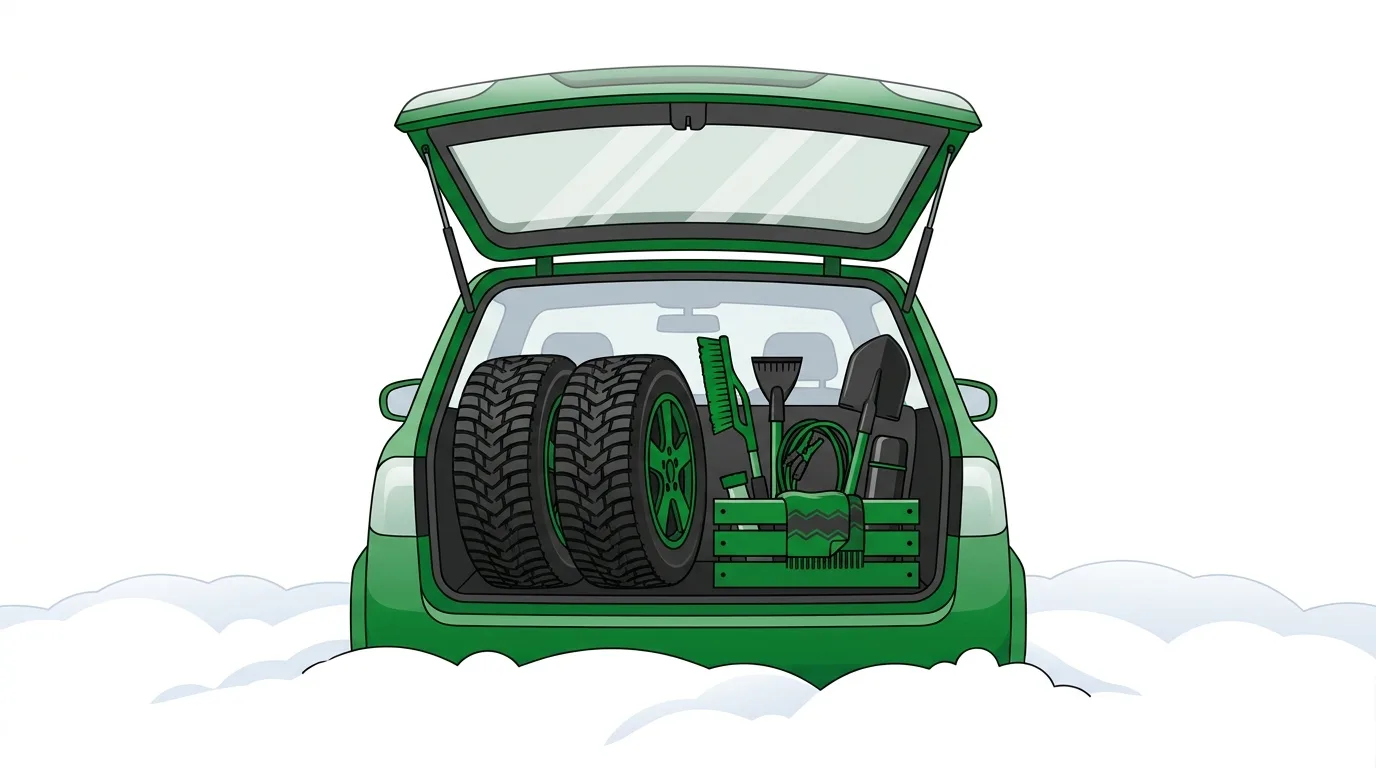
2. Pack an Emergency Car Kit for Highway 401 and DVP Delays
A minor fender-bender on the collector lanes of Highway 401 or a spun-out transport truck on the hill climbing out of the Don Valley can trap thousands of cars for hours. When you are carpooling, your emergency kit needs to look after every seat in the vehicle, not just the driver.
Following the Government of Ontario winter driving preparation checklist helps ensure you have the right recovery and warmth supplies on board before severe weather hits. Keep a dedicated bin latched in the trunk and ask every regular carpool rider to leave a spare pair of warm gloves and thick socks in the car or their work bag.
Vehicle Recovery and Visibility Gear
Stowing the right hardware in your trunk helps you clear heavy plow windrows at the end of the workday and stay visible to passing traffic if you have to pull onto a highway shoulder:
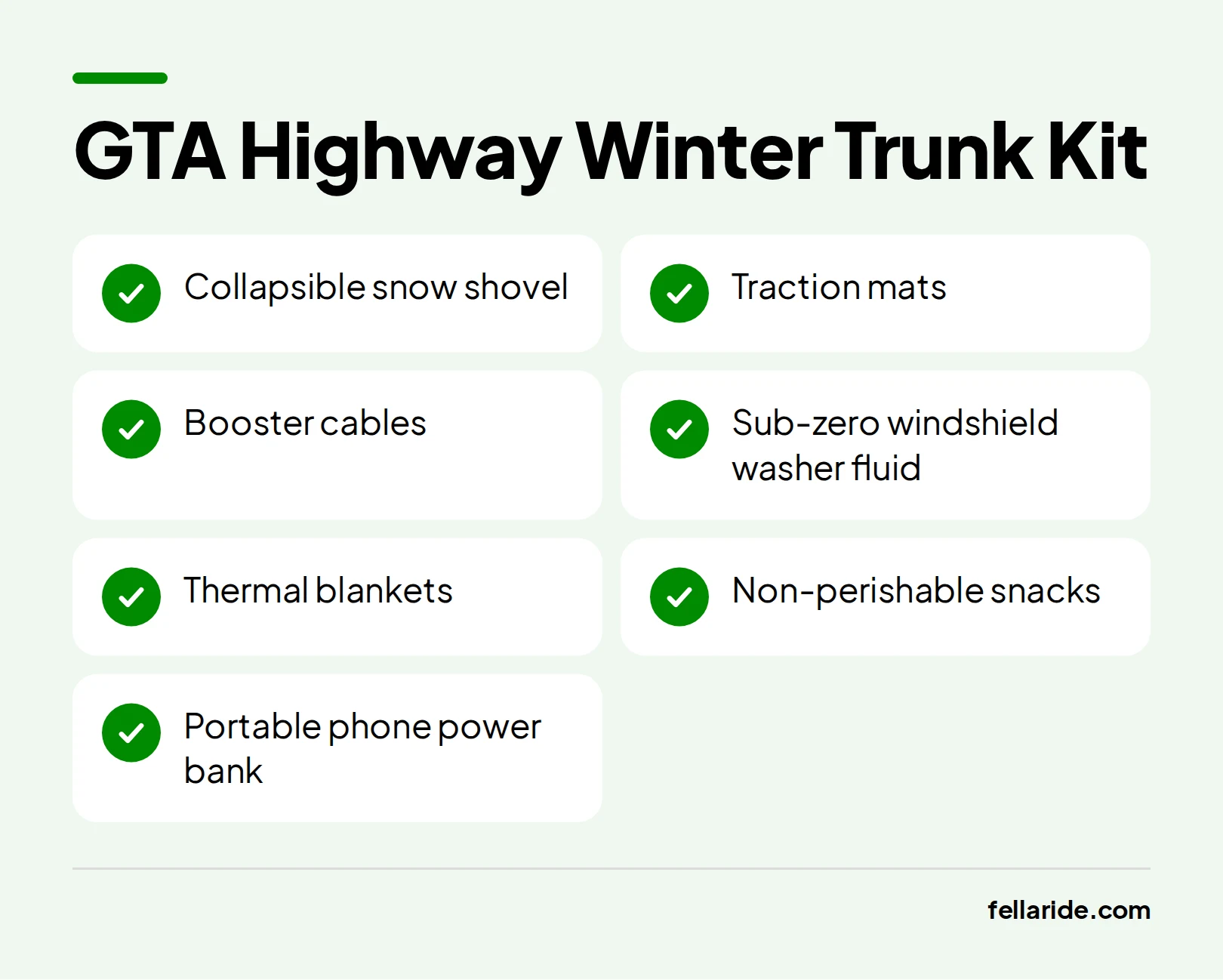
- Collapsible metal snow shovel: Strong enough to chop through frozen chunks left behind by municipal plows around your parked car.
- Foldable traction mats or kitty litter: Slips directly under spinning drive wheels when a commuter lot or side street turns into a sheet of ice.
- Heavy-duty booster cables or jump pack: Revives a cold-soaked battery in an exposed GO station or office parking lot without waiting hours for a tow truck.
- Extra jug of −40°C washer fluid: Highway salt spray coats windshields every few minutes, and running dry on the 401 blinds the driver almost instantly.
- LED road flares or reflective triangles: Alerts approaching drivers during whiteout squalls if your vehicle is disabled near a live lane.
Passenger Comfort and Survival Supplies
When traffic grinds to a halt for an extended closure, running the cabin heater continuously burns fuel and carries carbon monoxide risks if drifting snow blocks the tailpipe. Pack cabin supplies that keep three or four adults warm, hydrated, and connected:
- Fleece or Mylar thermal blankets: Pack one compact blanket per carpool seat so passengers retain body heat while cycling the engine off.
- High-calorie, non-perishable snacks: Store granola bars, nuts, and dried fruit that stay edible even after freezing in the trunk overnight.
- Insulated water bottles: Keep water inside the passenger cabin during drives so it does not freeze solid in the trunk.
- Charged portable power bank with multi-tip cables: Lets both the driver and riders keep their phones charged for traffic alerts and family check-ins without draining the car battery.
- Basic first-aid kit and hand warmers: Covers minor scrapes and warms stiff fingers after brushing snow or digging out a tire.
3. Set Up Backup Departure Windows for Snow Days
Trying to negotiate a new pickup time at 6:30 AM while snow is piling up on the driveway guarantees stress and late arrivals. Smart carpool groups establish three tiered departure modes in early November so everyone only needs a single word in the morning chat to know which schedule is active.
Before your morning roll call, check local weather alerts and radar for your specific GTA corridor, since lake-effect bands off Lake Ontario or Georgian Bay can hit Burlington, Vaughan, or Ajax very differently.
Build your group's three-tier departure calendar around your normal clear-weather pickup times:
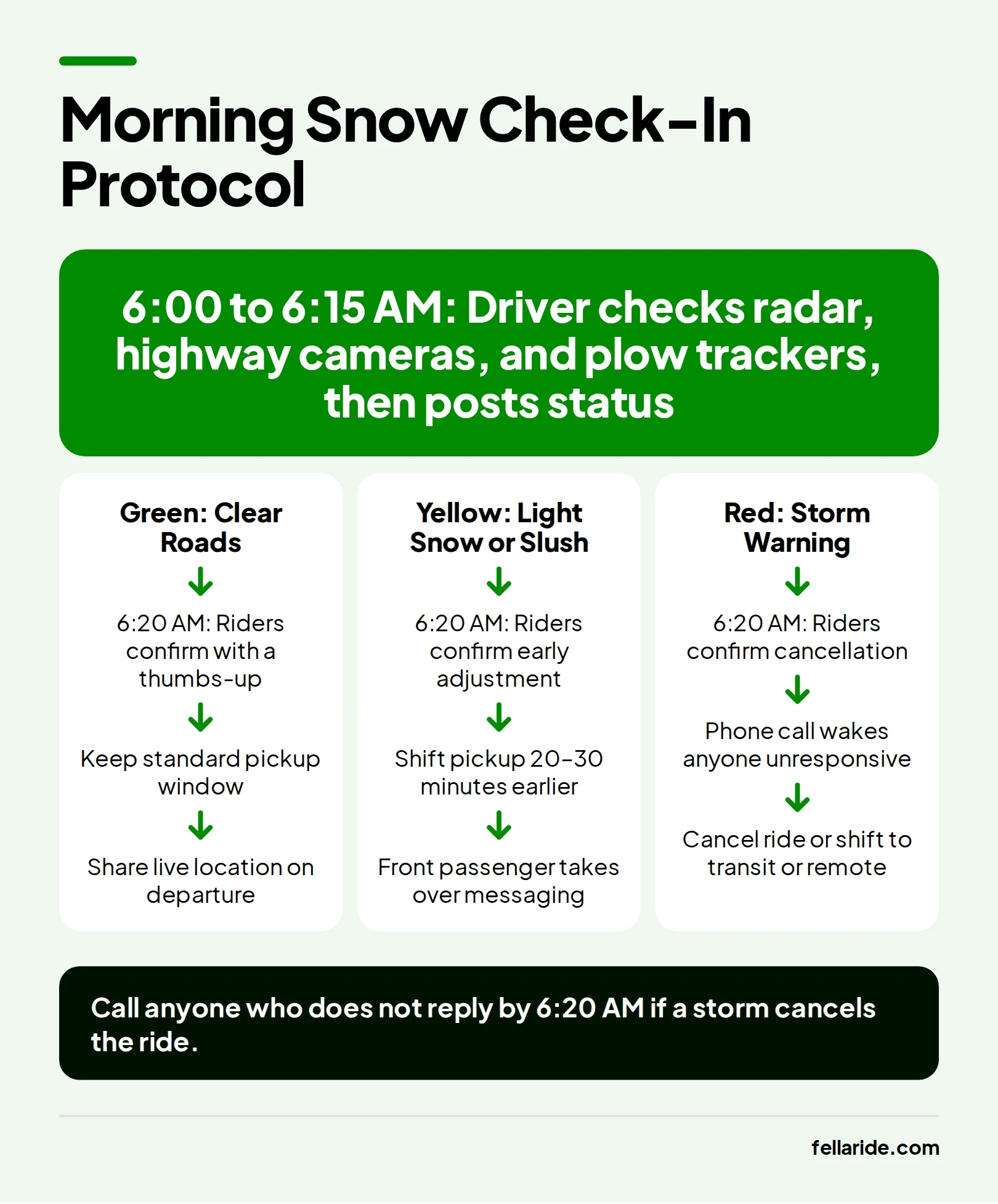
- Green Window (Normal Schedule): Roads are bare and dry or wet with above-freezing temperatures, so pickups happen at the standard time with a 3-minute curb wait limit.
- Yellow Window (20–30 Minutes Early): Light snow, slushy arterial lanes, or freezing drizzle is falling, so every pickup shifts 20 to 30 minutes earlier to absorb slower speeds on the 401, 404, or Gardiner Expressway.
- Red Window (Delay, Transit Switch, or Remote Work): A winter storm warning, freezing rain warning, or snow squall watch is in effect, triggering a delayed mid-morning departure, a switch to GO Transit, or a work-from-home day.
Agree in advance on how the evening return trip works when a storm rolls in during the afternoon. Setting an early afternoon check-in at 1:30 PM lets the group decide whether to leave the office an hour early before the afternoon rush locks up the highways.
4. Establish Clear Communication Protocols Between Drivers and Riders
Even the best backup schedule falls apart if half the carpool sleeps through a text message or checks three different apps. Decide on one primary group chat channel and one backup rule: if an urgent storm cancellation goes out, a quick phone call wakes anyone who has not reacted to the message.
Structure your snow-morning timeline backward from your earliest pickup so the driver has time to warm up the car, clear every window, and drive cautiously to the first stop:
- 6:00 AM Weather and Road Check: The designated driver checks local radar, highway cameras, and municipal plow trackers while clearing the driveway.
- 6:15 AM Group Status Call: The driver posts Green, Yellow, or Red in the group chat so every rider knows whether to get dressed for an early pickup or stay home.
- 6:20 AM Rider Confirmation: Each passenger replies with a quick thumbs-up emoji to confirm they are awake and adjusting to the announced window.
- Rolling Curb Updates: The driver shares live location tracking upon leaving home so riders can step outside two minutes before the car arrives rather than standing in sub-zero wind for ten minutes.
Watch out: Never text while driving to update riders on a delayed arrival. Hand navigation and group messaging duties to the front-seat passenger as soon as the first rider boards the car.
5. Inspect Wipers, Fluids, and Battery Health Before the First Freeze
Tires and trunk kits handle road grip and emergencies, but mechanical breakdowns in winter usually come down to three smaller culprits: weak batteries, streaked windshields, and frozen door or fluid lines. A quick weekend inspection in early November spares your carpool from a no-start morning in January.
When four people step into a cold car wearing wet boots and snowy coats, interior humidity spikes immediately and fogs the glass. Run through this mechanical checklist before the first deep freeze:
- Load-test the 12-volt battery: Cold temperatures slow the chemical reaction inside a lead-acid battery while thickening engine oil, so have a shop test any battery older than three years.
- Purge summer washer fluid: Drain or spray out remaining summer bug wash and refill the reservoir completely with winter de-icing fluid rated to −40°C or lower so nozzles never freeze shut.
- Upgrade to beam-style winter wipers: Frameless silicone or rubber-booted winter blades resist ice buildup along the hinge points and keep firm pressure against curved windshields in highway spray.
- Test the HVAC defroster and cabin filter: Replace a clogged cabin air filter so the front defroster and rear heated glass clear four passengers' breath and wet-boot moisture quickly.
- Lubricate door weatherstripping and locks: Wipe silicone protectant along rubber door seals so passenger doors do not freeze shut after an ice storm.
6. Adjust Shared Commute Costs and Pickup Spots for Unplowed Streets
Residential crescents and cul-de-sacs across the GTA are often the last streets to see a municipal snowplow after an overnight snowfall. Asking a carpool driver to turn into three unplowed subdivisions adds 15 minutes to the route and risks getting a fully loaded sedan stuck in deep ruts.
Cold weather also increases how much fuel a vehicle uses through higher rolling resistance on snow, denser cold air, electrical loads from defrosters, and longer warm-up times. Hold a five-minute group review in early November to agree on winter pickup logistics and fair cost sharing:
- Map arterial snow-day pickup corners: Pick a coffee shop parking lot, transit shelter, or gas station on a salted main road within a five-minute walk of each rider's home for Yellow Window mornings.
- Account for winter fuel and wash costs: Discuss a modest seasonal adjustment to your shared commute contribution to cover higher winter fuel burn, extra washer fluid jugs, and underbody salt washes.
- Clarify snow-day cancellation fairness: Agree in advance whether riders still chip in for fixed weekly parking passes when a Red Window storm forces the group to stay home.
- Protect the car interior with winter mats: Use high-walled rubber floor mats in both the front and rear footwells, and ask every passenger to knock snow off their boots before swinging their legs inside.
Putting these habits in place before mid-November turns winter carpooling into a predictable team routine.