Ottawa Campus Commuting: Carleton and uOttawa Student Rides
TL;DR
- Audit your weekly Carleton or uOttawa timetable to spot Highway 417 bottlenecks and off-peak O-Train transfer delays.
- Pair your semester transit pass with shared rides from low-detour hubs like Bayshore, Blair, and St. Laurent Stations.
- Split campus parking permits and fuel legally under Ontario non-commercial rules using FellaRide's $5 minimum and $0.20/km guideline.
- Join verified campus Trusted Groups to lock in recurring multi-day rides and keep moving during transit strikes without platform commissions.
Share Your Daily Ottawa Campus Commute on FellaRide
Match with verified Hosts and Guests in campus Trusted Groups to split fuel and parking costs without platform commissions.
What you need
Getting across the National Capital Region for morning lectures at Carleton University or late labs at the University of Ottawa takes practical planning. Before your semester routine locks in, gather a few essentials so you can compare transit routes, highway corridors, and shared rides accurately.
- Your finalized course timetable: List exact start and end times for lectures, labs, tutorials, and part-time work shifts across the week.
- A valid transit pass or PRESTO card: Useful for riding OC Transpo buses, O-Train Line 1 and Line 2, or connecting across the river on STO routes from Gatineau.
- A verified FellaRide account: Available on iOS and Android to commuters aged 18 or older for joining campus Trusted Groups.
- 15 minutes of planning time: Enough to map your primary Highway 417 interchanges and suburban meetup hubs before Monday morning.
1. Audit Your Lecture Timetable and Ottawa Highway 417 Commute Corridors
An 8:30 a.m. lecture at uOttawa's downtown campus or an engineering lab at Carleton University looks straightforward on a map until you factor in peak bottlenecks. Commuters heading inbound from Kanata along Highway 417 (the Queensway), merging from Highway 416, or driving west from Orleans face dense rush-hour volume near the Nicholas Street and Bronson Avenue exits.
Students crossing the Ottawa River from Gatineau deal with similar congestion on the Macdonald-Cartier, Portage, and Chaudière bridges. Mapping your weekly schedule before classes begin helps you connect with Hosts and Guests whose schedules align with yours. You can also review our broader student campus carpooling guide to see how peers organize daily trips.
- Map your core anchor times: Write down your fixed lecture starts, lab dismissals, and recurring part-time shift hours from Monday to Friday.
- Identify your primary corridor: Note whether your trip follows Highway 417 from the west end, Highway 174 and the Queensway from the east, or Colonel By Drive and Bronson Avenue toward Carleton.
- Spot transfer pinch points: Flag late-evening classes where suburban bus connections at Blair Station, Tunney's Pasture, or Bayview Station drop to 30-minute intervals.
- Set clear pickup expectations: Decide on your preferred departure buffer and cost-sharing arrangement before your first Monday pickup.
2. Compare OC Transpo, STO, O-Train Connections, and Student Carpooling
Even with a semester U-Pass covering base fares on OC Transpo and STO routes, relying solely on public transit carries hidden costs when you live in outer suburbs. According to Statistics Canada commuting data cited in our student campus carpooling guide, public transit riders spend an average of 42.2 minutes travelling compared with 24.5 minutes by car, and nearly 1.5 million workers commute for an hour or longer.
When a local feeder bus in Kanata South or Chapel Hill runs late, missing an O-Train transfer can force you into an expensive solo taxi just to make a midterm exam or retail shift on time. That time gap grows after dark when suburban bus frequencies drop to thirty-minute or hourly intervals, leaving students waiting on poorly lit arterial corridors after evening labs.
You do not have to choose exclusively between rail and shared cars.
- Suburban Park-and-Ride to O-Train: Share a morning ride from your residential street in Kanata or Orleans directly to Blair or Bayshore Station to skip slow local feeder buses.
- Direct campus corridor trips: Match with a fellow student driving straight along Highway 417 to uOttawa or down Bronson Avenue to Carleton University.
- Morning carpool and evening transit: Catch a shared ride to arrive fresh for a morning seminar, then ride O-Train Line 1 or Line 2 home at your own pace after late library study sessions.
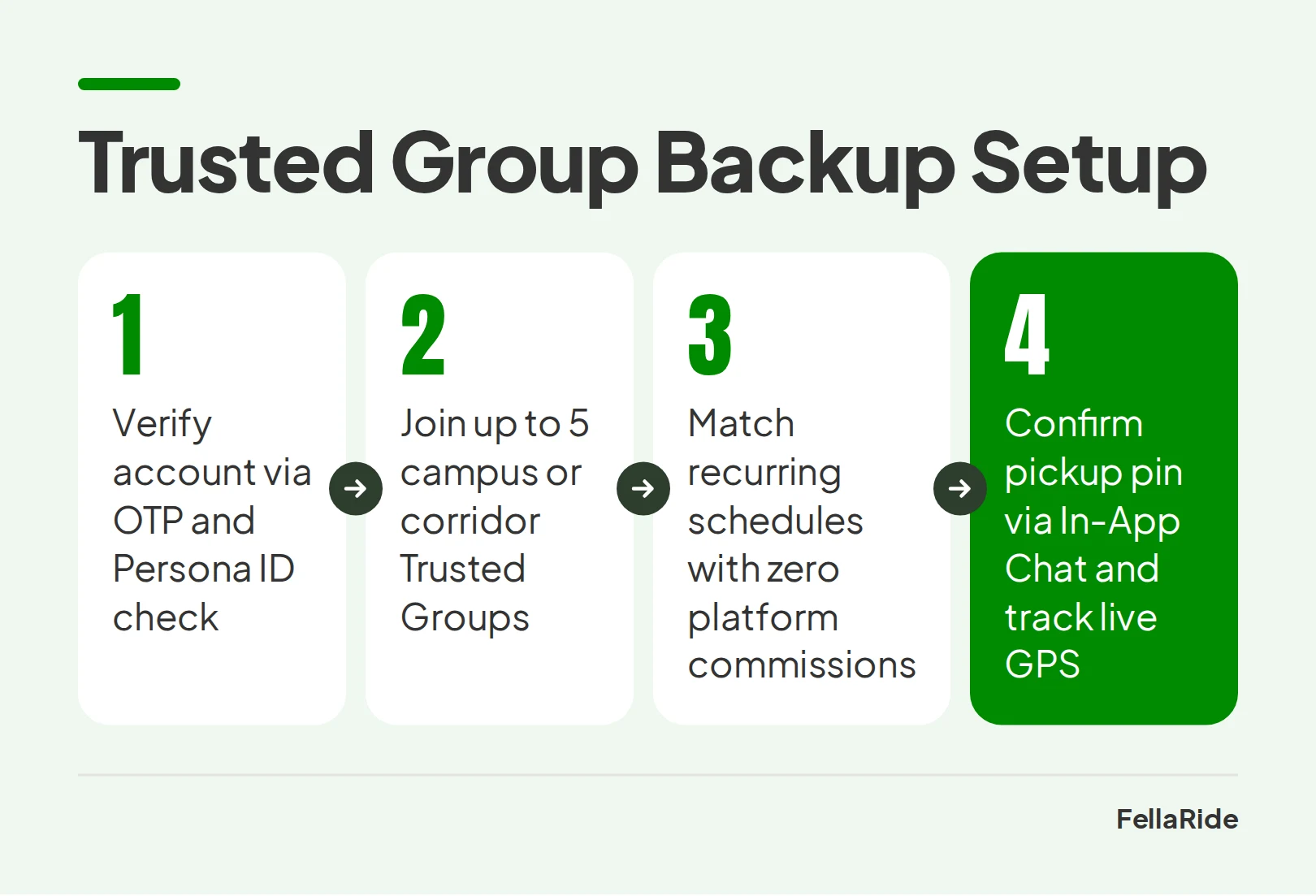
Tip: Confirm your exact pickup pin at Bayshore, Blair, or St. Laurent Station via In-App Chat the evening before a winter storm so everyone stays on schedule.
3. Overcome Campus Parking Permit Shortages with Non-Commercial Cost Splitting
Securing an on-campus parking permit at uOttawa's tight downtown lots or Carleton's high-demand garages is tough, and waitlists fill up months before September. When two to four students share a single vehicle into campus, one parking pass or daily lot fee serves the entire group while reducing congestion around Sandy Hill and Colonel By Drive.
In Ontario, sharing empty seats with classmates is legal under a standard Class G driver's licence when structured strictly to recover costs. When ordinary commuters share a planned daily round trip purely to split actual vehicle operating expenses, they do not need commercial licences or municipal taxi permits. You can explore our detailed breakdown of how non-commercial carpooling works in Ontario before posting your first trip.
FellaRide operates as a technology marketplace connecting Hosts and Guests for private, non-commercial carpooling without platform commissions, and profit is strictly prohibited. Rather than acting as a commercial carrier, the platform pairs people already travelling along the same route so they can divide travel costs fairly.
Because everyone in the group is heading to the exact same campus lot or lecture building, drop-offs require zero extra detours and cost splits are clear before you step into the vehicle. To keep reimbursements simple and consistent with provincial norms, follow these core boundaries:
- Shared origin and destination: The Host is already driving to campus or a nearby workplace for their own schedule rather than running an on-demand taxi trip.
- Transparent cost guideline: FellaRide recommends a $5 minimum fare per ride (including stops and multi-leg trips) and a $0.20/km guideline rate to offset fuel and wear.
- Upfront parking splits: Agree via In-App Chat on how your group will divide daily or semester campus parking fees before confirming the schedule.
- Standard Class G licensing: Keeping trips incidental and strictly cost-recovery allows Hosts to drive under a standard Ontario Class G licence.
4. Pick Low-Detour Pickup Hubs in Kanata, Orleans, and Gatineau
The fastest way to derail a morning campus carpool is weaving through winding residential crescents in Barrhaven, Bridlewood, or Avalon to collect three separate riders. Instead, pick a single high-visibility hub right beside a Highway 417 interchange or rapid transit station so the Host can merge straight back onto the main corridor.
Using Built-In Maps Navigation inside the FellaRide app lets both Hosts and Guests view the exact route and designated pickup pin before leaving home. Pairing highway ramps with O-Train stations also makes it simple for Guests from Gatineau or southern neighborhoods to finish the last leg smoothly. Check out our app-based carpooling pros and cons guide for more corridor tips.
Selecting highway-adjacent transit hubs in west, central, and east Ottawa eliminates residential detours for campus carpools.
| Ottawa Hub | Corridor & Access | Why It Works for Campus Rides |
|---|---|---|
| Bayshore Shopping Centre / Station | West end right off Highway 417 | Fastest pickup and drop-off stop for Kanata and west Ottawa students |
| St. Laurent or Blair Station | East end with direct Highway 417 ramps | Connects Orleans riders without forcing the Host onto narrow downtown streets |
| Rideau Centre / Downtown Core | Central core walkable to O-Train Line 1 | Easy link for Gatineau cross-river riders and downtown residents |
| Carleton University or uOttawa Campus | Central campus drop-off zones | Direct arrival right at lecture buildings and campus ring roads |
5. Join Verified Campus Trusted Groups and Keep Moving During Transit Strikes
When transit strikes, O-Train line shutdowns, or winter rail disruptions hit Ottawa, thousands of students get stranded searching for last-minute rides. Belonging to an active FellaRide Trusted Group before a disruption starts gives you an established circle of fellow students and campus staff who already travel your corridor.
Because FellaRide never charges platform commissions, community ride groups keep daily cost-sharing affordable even when emergency commercial ride-hail prices surge during a transit strike.
Beyond saving money, sharing a quiet 30-minute morning drive with three peers from your area builds a supportive campus micro-community where students swap course tips, winter advice, and part-time job leads. After each trip, Hosts and Guests can leave two-way User Ratings and Reviews to build long-term reliability across the community.
Watch out: Never send upfront e-transfers to anonymous accounts on unverified social media boards before confirming their identity and trip details.
Follow these steps to join verified campus groups and lock in your weekly or strike-backup commute:
- Register your mobile account: Install FellaRide on iOS or Android, enter your name, email, and phone number, and verify with a one-time passcode (OTP). All members must be 18 or older.
- Select up to 5 communities: Join Organizational (ORG) campus communities using an approved email domain, Moderator-Controlled (MOD) groups, or Global (Open) corridor circles. Each user can join up to 5 communities.
- Set up Multi-Day Scheduling: Use Post a Ride as a Host or Search a Ride and Post a Ride Request as a Guest to lock in recurring weekly commutes or transit-strike backup seats, and enable Real-Time Ride Tracking during every journey.
6. Coordinate Ottawa Winter Weather Buffers and Intercity Weekend Rides
Ottawa Valley winters bring heavy snowfalls, freezing rain, and biting wind chill across exposed river crossings and transit platforms. According to Health Canada guidance on extreme cold cited in our campus commuter resources, prolonged waiting in sub-zero temperatures and wind chill raises the risk of windburn, frostbite, and hypothermia. Replacing two outdoor bus transfers with a pre-arranged pickup keeps you warm and focused for morning exams.
Good etiquette keeps winter carpools running smoothly all term, and you can review our university commuter guide on transit and campus carpools to align expectations with your group. Many Carleton and uOttawa students also use FellaRide communities to share weekend drives home along Highway 7 or Highway 416 and Highway 401; see our Toronto to Ottawa road trip carpool guide for full corridor planning.
- Confirm snow-day buffers the night before: Message your group via In-App Chat the evening before a winter storm to confirm your exact pickup landmark and waiting window.
- Arrive 5 minutes early: Be ready at your designated meetup spot five minutes before departure, and keep wet winter bags tidy on the floor.
- Build a 15-minute intercity break: When sharing weekend rides between Ottawa and the GTA, plan a 15-minute rest stop in Kingston, Brockville, Belleville, Port Hope, or Perth and Carleton Place.
Learn more about FellaRide
FAQ
Is student carpooling to Carleton or uOttawa legal under a standard Ontario driver's licence?
Yes, sharing a ride to split the cost of a trip the Host is already taking is a lawful non-commercial carpool in Ontario. As long as Guests only reimburse actual operating expenses with no profit margin on a regular daily commute, the Host drives under a standard Ontario Class G licence.
How much should Ottawa students contribute when splitting fuel and campus parking on FellaRide?
FellaRide charges zero platform commissions and prohibits driver profit. The platform recommends a minimum contribution of $5 per ride and a guideline rate of $0.20/km to help Hosts recover shared travel costs, and groups can agree on campus parking splits upfront via In-App Chat.
How do FellaRide Trusted Groups help students keep commuting during an Ottawa transit strike?
Trusted Groups connect you with verified peers from your own university or commuter corridor before a rail or bus disruption occurs. Members can use Multi-Day Scheduling, Post a Ride, or Post a Ride Request to coordinate recurring shared vehicles without paying commercial surge fares.
What happens to my government ID when I verify my profile on FellaRide?
Optional identity and liveness verification is handled through Persona, a third-party verification provider.
Sources
Learn more about FellaRide