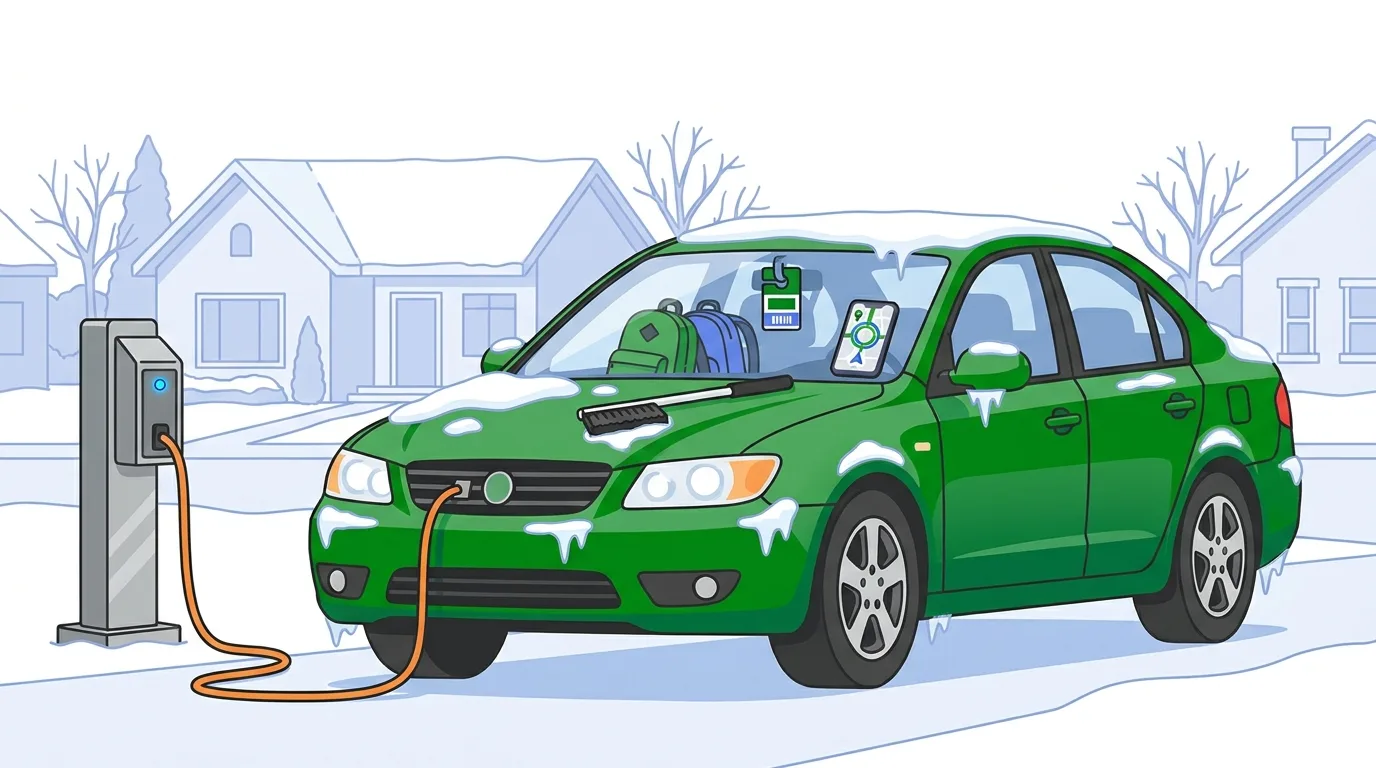
Edmonton Student Winter Commute: U of A and MacEwan Guide
TL;DR
- Audit your U of A or MacEwan winter timetable by trip leg to spot where suburban feeder bus transfers add outdoor waiting time.
- Pair your Arc U-Pass on the Capital and Metro LRT with shared rides along Anthony Henday Drive, Whitemud Drive, and Yellowhead Trail.
- Split monthly campus parkade permits and extra winter fuel burn evenly among two to four verified students without platform commissions on FellaRide.
- Use Multi-Day Scheduling and campus Trusted Groups on FellaRide to lock in recurring rides for morning lectures and late-evening labs.
- Plug in block heaters below −15°C, use arterial pickup corners outside unplowed cul-de-sacs, and hold a strict five-minute pickup grace window.
Learn more about FellaRide
What you need
Getting across Edmonton for morning lectures at the University of Alberta or afternoon classes at MacEwan University takes preparation once January temperatures drop. Gather these items before classes begin so you can map routes, compare transit transfers, and coordinate rides accurately.
- Your finalized winter timetable: List exact start and end times for lectures, seminars, and late labs across North Campus, Campus Saint-Jean, or City Centre Campus.
- An Arc card loaded with your U-Pass: Useful for comparing Edmonton Transit Service (ETS) LRT and regional feeder bus times against road corridors.
- A verified FellaRide account: Available on iOS and Android to individuals aged 18 or older for joining a campus Trusted Group.
- A government-issued ID: Required if you complete optional identity verification through Persona to add a verification badge to your profile.
- Cold-weather vehicle supplies: If driving as a Host, prepare four three-peak winter tires, a block heater cord, low-temperature washer fluid, and a long snow brush.
- 20 minutes with your carpool group: Enough time for a quick coffee or chat to agree on arterial pickup corners, departure buffers, and cost splits.
1. Audit Your Winter Lecture Schedule and Anthony Henday Drive Corridors
An 8:00 a.m. lecture at the University of Alberta North Campus looks very different on a winter road map when you commute from St. Albert versus Leduc or Sherwood Park. Start by breaking your weekly timetable into individual trip legs rather than treating every weekday the same. Many post-secondary students travel during midday or late-evening hours when suburban feeder buses run less often.
When classes and labs spread across different days, mapping both ETS rail corridors and primary ring-road arteries helps you spot where river valley bottlenecks or bus transfers add half an hour to your trip. Look at how your neighbourhood connects to your campus across the Edmonton metropolitan region:
- University of Alberta (North Campus and South Campus): Connected from southwest and southeast suburbs via Anthony Henday Drive to Whitemud Drive, Calgary Trail, and Fox Drive, or directly via the ETS Capital and Metro LRT lines.
- MacEwan University (City Centre Campus along 104 Avenue): Reached from northwest and northeast communities via Anthony Henday Drive to Yellowhead Trail and 97 Street or St. Albert Trail, as well as the Metro Line LRT.
- Regional commuter towns (St. Albert, Sherwood Park, Spruce Grove, Leduc): Linked by Highway 2, Highway 16, and Baseline Road into Anthony Henday Drive interchanges and suburban Park and Ride hubs.
Write down the door-to-door time for each leg, including the icy walk from an LRT station or surface lot to your lecture hall. Highlight the days where an evening lab forces long outdoor transfers across municipal boundaries, much like the patterns covered in our U of C and MRU Student Commuter Rideshare Guide.
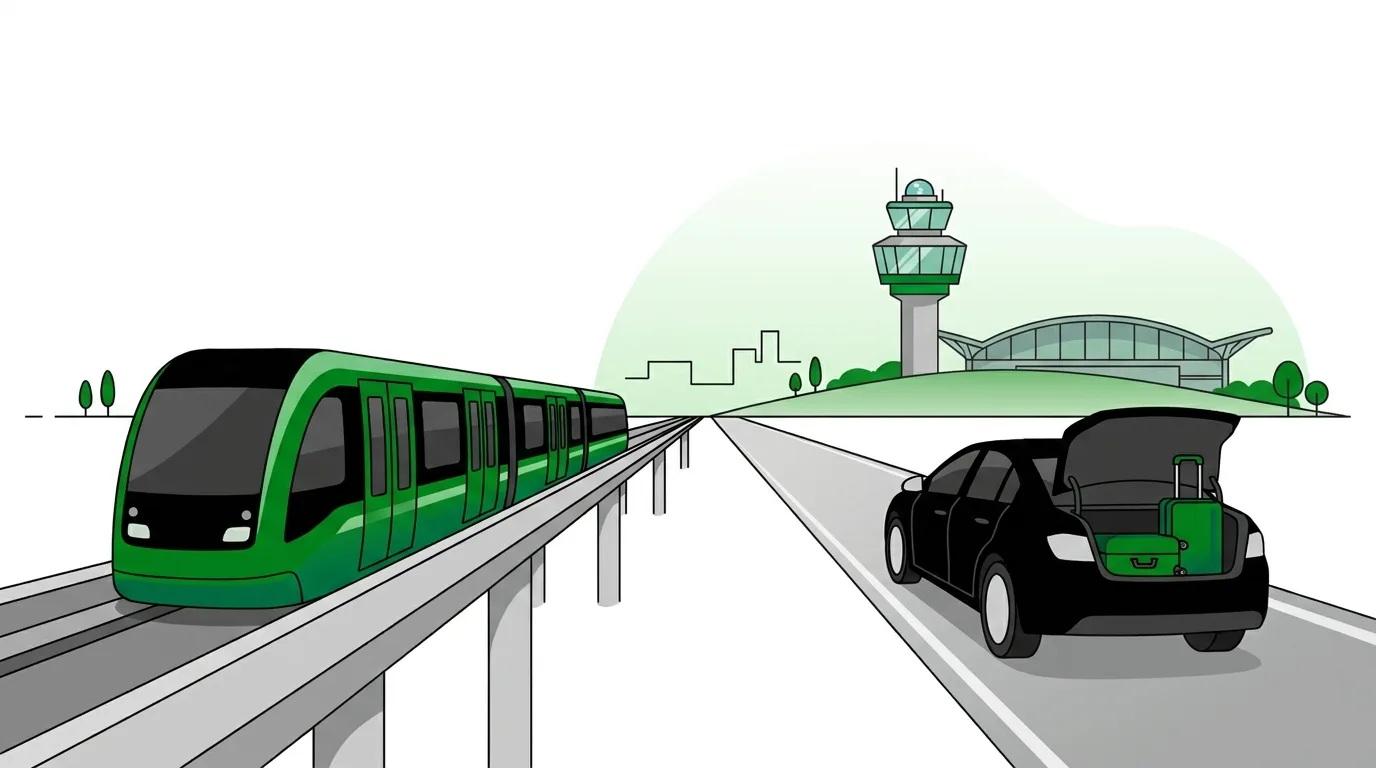
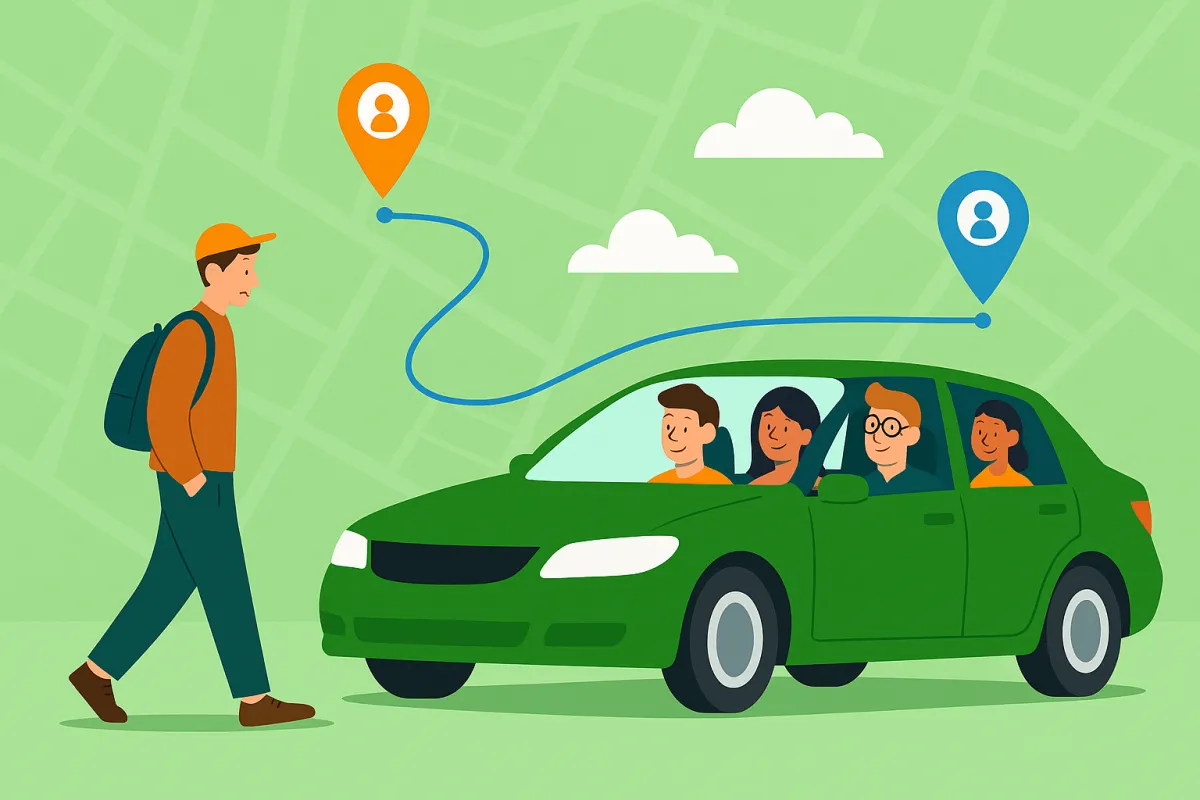
Peer-to-peer carpooling works alongside public transit rather than replacing it. Sharing a morning ride from a suburban subdivision to an LRT Park and Ride station, or driving directly between outer ring-road neighbourhoods and campus, fills the first-mile and last-mile gaps where fixed transit routes require multiple transfers.
Tip: Pick a salted arterial corner within a five-minute walk of home so your Host never gets stuck in an unplowed residential crescent after an overnight snowfall.
2. Compare ETS LRT, Regional Feeder Buses, and Student Carpooling in Sub-Zero Weather
Standing at an exposed suburban stop along 137 Avenue or Baseline Road in January drains your focus before your first class even starts. When high winds combine with deep sub-zero temperatures, prolonged outdoor waits at unsheltered stops quickly lead to windburn and cold exhaustion.
Even when you dress in heavy thermal layers, moving repeatedly between freezing outdoor platforms and warm, crowded train cars takes a physical toll. Damp boots, fogged glasses, and heavy backpacks packed with laptops and winter coats make it harder to settle into a three-hour seminar.
Winter conditions hit Edmonton student timetables in several predictable ways:
- Unpredictable surface delays: Snowplows, windrows, and icy river valley grades on Groat Road or Walterdale Hill slow down surface routes.
- Missed regional connections: A 10-minute delay on a local feeder bus can mean watching your regional bus to St. Albert, Strathcona County, or Leduc pull away.
- Late-lab schedule friction: Balancing evening labs, part-time shifts, and study groups becomes difficult when off-peak feeder frequency drops to 30 or 60 minutes.
- Budget strain: Relying on commercial ride-hailing during cold snaps quickly drains a student budget.
Because full-time students at U of A and MacEwan typically receive the regional Arc U-Pass as part of mandatory fees, the smartest approach is often combining transit with peer carpooling. You can ride the Capital or Metro LRT on clear midday schedules, and coordinate a warm, point-to-point carpool with verified classmates on bitter −25°C mornings or late lab nights.
3. Navigate U of A and MacEwan Parking Pass Waitlists with Peer Cost-Sharing
Securing a winter parking stall near your faculty building at U of A or MacEwan is both competitive and expensive. Heated parkades and plug-in surface stalls near Windsor Car Park, Education Car Park, Stadium Car Park, or MacEwan's 105 Street underground lots frequently carry long waitlists before the fall and winter terms even open.
When one student in your residential area manages to secure a monthly campus permit or books a daily plug-in stall, driving solo leaves three empty seats and puts the entire permit and fuel bill on one budget. Forming a two-to-four-person campus carpool lets a Host recover actual vehicle expenses while giving each Guest a heated commute for a fraction of solo driving costs.
Under non-commercial peer-to-peer cost recovery, drivers and passengers share actual trip costs without turning the ride into a for-profit service. As noted in the Government of Alberta commercial driving certification guidelines, commercial licensing rules apply to for-hire transportation rather than private drivers who strictly share trip expenses without profit. FellaRide operates as a commission-free platform built specifically for this non-commercial peer-to-peer cost recovery.
Cold prairie weather also increases how much fuel a vehicle uses. According to Natural Resources Canada guidance on cold-weather fuel consumption, sub-zero temperatures increase fuel burn due to denser cold air, higher rolling resistance on snow, electrical loads from defrosters, and longer engine warm-ups. Hold a quick group chat before the semester starts to agree on fair winter cost sharing:
- Split monthly parking permits fairly: Divide the exact monthly campus parkade pass or daily lot fee evenly across the regular riders in the car.
- Account for winter fuel and maintenance: Include a modest winter adjustment for higher sub-zero fuel use, de-icing washer fluid, and underbody salt washes.
- Set snow-day cancellation rules upfront: Agree in advance whether every Guest still chips in for a fixed monthly campus parking permit when a severe blizzard moves a lecture online.
- Confirm terms before booking: Use FellaRide to view proposed cost splits upfront and align with your Host in chat before confirming a seat.
4. Join Campus Trusted Groups and Schedule Recurring Rides on FellaRide
Posting for rides on open classified boards or anonymous social media threads can feel uncertain when you do not know who is behind the account. Organizing rides inside closed, verifiable Communities and Trusted Groups solves the biggest logistical hurdles of student carpooling before you ever step outside into the cold.
When you match with peers heading to the same campus quad or underground parkade, drop-offs require zero extra detours and everyone shares similar lecture block schedules. Follow these steps in the FellaRide in-app experience to set up a recurring winter semester routine:
- Verify your student profile: Complete optional identity verification with a government ID through Persona to earn a verification badge that builds trust across your campus circle.
- Save your Favorite Places: Open Settings and go to Manage Saved Addresses to save private locations like your home address, an arterial pickup stop, and your U of A or MacEwan drop-off point for faster searching and posting.
- Join or create a campus Trusted Group: Browse Communities classified as Global, Organizational, Moderator-Controlled, or Interest Based to connect with fellow post-secondary commuters.
- Publish or filter recurring trips: If you drive, open Post a Ride, choose recurring or one-time under Multi-Day Scheduling, enter your Anthony Henday or Whitemud route, available seats, vehicle details, and preferences, and publish to your selected communities.
- Search or request a seat: If you ride as a Guest, open Search a Ride to filter by route, date, time, and community, or use Post a Ride Request if no exact match appears yet.
- Coordinate via In-App Chat: Message your Host or Guest to confirm pickup corners, trunk space for lab gear, and cost-sharing terms before confirming the trip.
Once your trip starts, Built-In Maps Navigation displays the route and pickup points directly inside the app while Real-Time Ride Tracking provides live GPS visibility. After arriving on campus, both participants can leave User Ratings and Reviews to keep community reliability high.
5. Prepare Your Student Carpool for Edmonton Cold-Weather Starts and Snow-Day Pickups
A morning cold snap in Edmonton will test both your vehicle and your group's communication habits. When you share a ride with two or three classmates, a dead battery or a stuck sedan in an unplowed cul-de-sac affects everyone's morning lab check-in. You can review more cold-weather planning tips in our guide to preparing your carpool for winter weather and snowstorms.
Cold-Weather Vehicle Readiness for Hosts
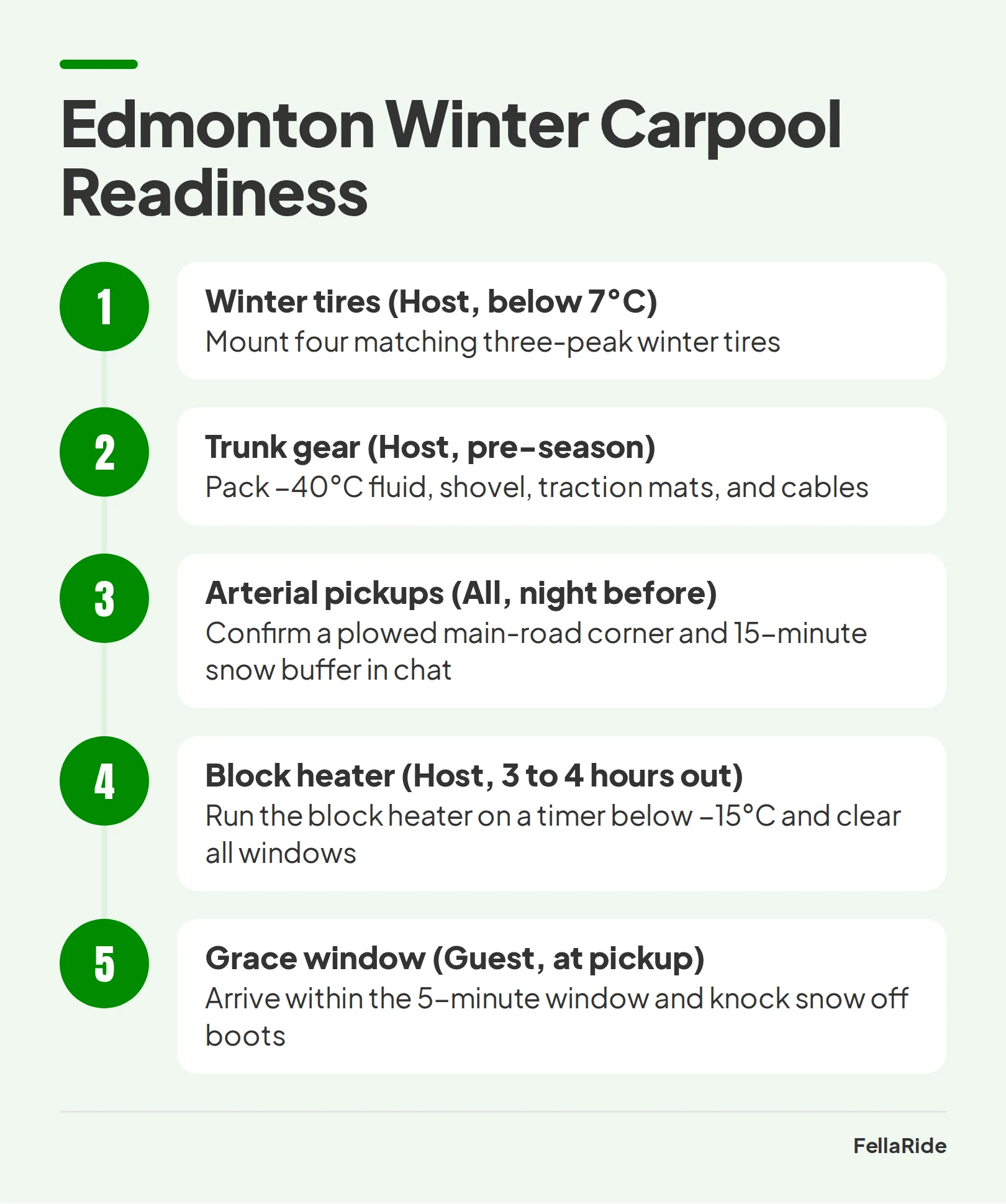
Before temperatures stay below −15°C, every Host should prepare the vehicle for reliable starts and highway slush on Anthony Henday Drive:
- Establish a block heater routine: Plug in your engine block heater on an outdoor timer for three to four hours before morning departure whenever overnight lows drop below −15°C.
- Install three-peak winter tires: Mount four matching winter tires before temperatures drop below 7°C so the rubber stays flexible on packed snow and polished river-valley intersections.
- Test battery and fluids: Have your 12-volt battery load-tested before winter, keep washer fluid rated to −40°C topped up, and clear all snow and ice from every window before picking up your first Guest.
- Pack a weatherproof trunk bin: Stock booster cables, a collapsible shovel, traction mats, extra gloves, a blanket, and a snow brush.
Snow-Day Pickup Etiquette for Guests
Residential crescents in suburbs like Windermere, Terwillegar, or Castle Downs are often the last streets cleared after a snowfall. Turning into three unplowed subdivisions can easily add 15 minutes to the trip and risk getting a loaded car stuck in deep ruts.
- Meet on plowed arterial corners: Pick a service station, coffee shop lot, or transit bay along a salted main road within a five-minute walk of each rider's home.
- Respect a five-minute grace window: Agree on a strict departure window, such as waiting up to five minutes past the scheduled pickup time, so one late person never makes the whole car late for an exam.
- Check 511 Alberta the night before: Review live highway reports on 511 Alberta and add a 15-minute snow-day departure buffer via In-App Chat before going to sleep.
- Protect the cabin interior: Knock packed snow off your winter boots before stepping inside and use high-walled rubber floor mats to keep melting slush contained.
Watch out: Always confirm your exact arterial pickup landmark and five-minute waiting window in In-App Chat the evening before a sub-zero trip so no Guest is left waiting outdoors in extreme wind chill.
Learn more about FellaRide
FAQ
Can I use FellaRide if I only drive or ride to campus two or three days a week?
Yes. FellaRide supports both one-time trips and recurring schedules through Multi-Day Scheduling, so you can match rides exclusively on the days you have in-person lectures or labs. You can also copy completed rides when posting a new trip and edit the details before publishing.
What happens if no posted carpool matches my late-evening lab at U of A or MacEwan?
If you do not see an existing match in Search a Ride, you can use Post a Ride Request inside your selected Communities. Only members of the communities where you post the request can view it, and the request stays active until a matching ride is confirmed, you cancel it, or the ride date passes.
Are my home and campus addresses visible to everyone when I save them on FellaRide?
No. Favorite Places saved in Settings under Manage Saved Addresses are completely private to your account and are only used to speed up trip posting and route searching. You coordinate your exact pickup landmark directly with your carpool partners in In-App Chat.
Does FellaRide charge a booking commission on student cost-sharing?
No. FellaRide operates as a commission-free platform for non-commercial peer-to-peer cost recovery, meaning Hosts and Guests split travel expenses directly without profit or platform subscription tiers.
Learn more about FellaRide