Mississauga to Downtown Toronto Commute: Routes & Carpools
TL;DR
- FellaRide connects Hosts and Guests aged 18 and older inside workplace, campus, and neighbourhood Trusted Groups to share rides without profit.
- Non-commercial cost-sharing on FellaRide follows a $5 minimum contribution and a $0.20/km guideline to split fuel, parking, and tolls fairly.
- Pairing peer-to-peer carpooling with Lakeshore West GO stations or provincial carpool lots bridges first-mile and late-night transit gaps.
Learn more about FellaRide
What you need
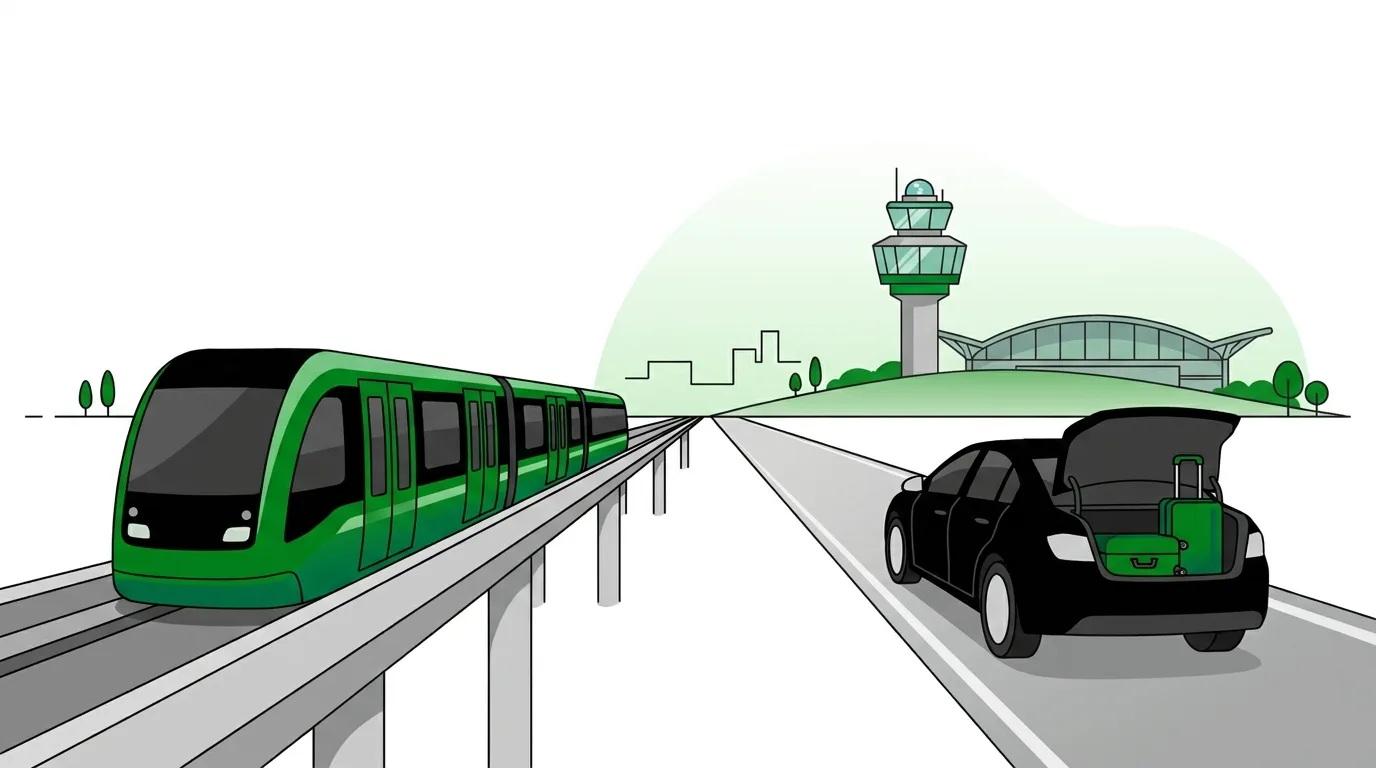
Pulling onto the eastbound Queen Elizabeth Way from Mississauga Road or Hurontario Street during the morning rush quickly puts you in bumper-to-bumper traffic heading toward the Humber Bay arch bridge. While regular highway lanes inch toward the Gardiner Expressway, vehicles in the designated High Occupancy Vehicle lane glide past the bottleneck.
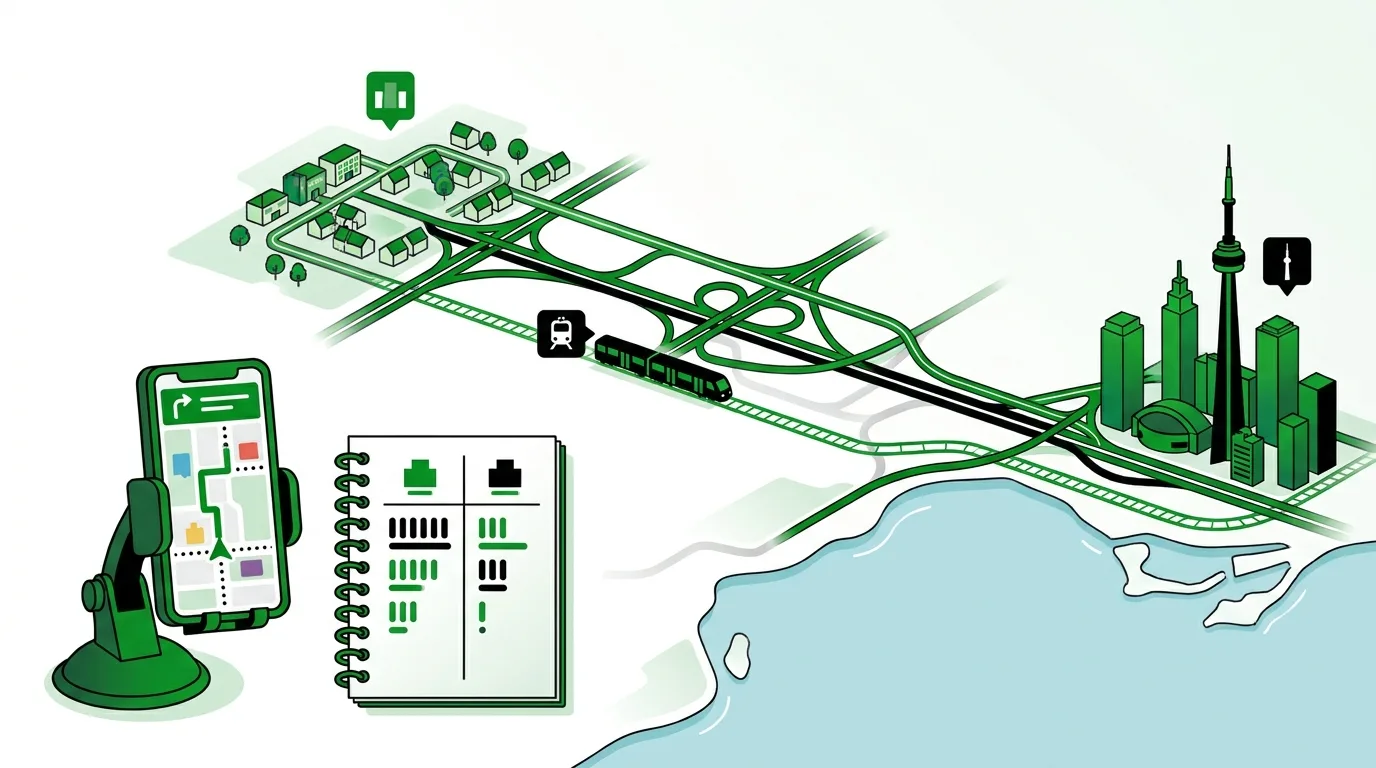
Whether you commute from a Square One condo, an Erin Mills townhouse, or a Port Credit apartment, choosing the right corridor and mode saves both money and morning stress. Before you plan your weekly route into downtown Toronto, gather a few essentials so you can compare transit, solo driving, and shared rides:
- A compatible smartphone: You need a modern mobile device to browse routes, coordinate pickups, and message your match on FellaRide.
- Active GPS location services: Turning on location tracking enables accurate pickup coordination and live trip safety tools.
- A reliable mobile data plan: Real-time data access keeps you updated if weather or highway congestion shifts your arrival window.
- A verified FellaRide account: Commuters aged 18 years or older can register, verify their work or school email domain, and join a Trusted Group.
- A standard Ontario Class G licence: If you plan to offer empty seats as a Host on a trip you are already taking, you operate under your standard personal licence and commuting auto insurance.
- A backup PRESTO transit card: Keeping a loaded transit card in your bag ensures an unexpected late office meeting or evening lab never leaves you without a ride home.
1. Map Your Starting Corridor from Square One, Erin Mills, or Port Credit
An early morning seminar at the University of Toronto St. George campus or Toronto Metropolitan University requires a different travel strategy depending on which Mississauga neighbourhood you call home. Start by separating your week into distinct morning and evening trips instead of treating every weekday as identical.
Many post-secondary students and shift workers travel during off-peak hours when suburban feeder buses run less frequently. Mapping how your neighbourhood links to regional rail lines and provincial highways shows you exactly where municipal transfers slow you down. Check our GTA university commuter guide to see how students compare rail transfers against shared campus drives.
Each of Mississauga's primary residential hubs feeds into a distinct set of arteries heading toward downtown Toronto:
- Erin Mills and western Mississauga: Commuters sit near the Highway 403 corridor, giving them access to eastbound HOV lanes that connect toward Highway 401 or swing south toward the QEW.
- Port Credit and southern lakeshore communities: Residents have immediate access to the Lakeshore West GO rail line into Union Station alongside nearby on-ramps for the eastbound QEW and Gardiner Expressway.
- Northern Mississauga and Pearson corridor: Travellers near the airport business districts connect via Highway 401 and Highway 427 or board the Kitchener rail corridor toward Union Station.
Write down the complete door-to-door duration for each trip leg, including the walk from Union Station, the TTC Line 1 subway transfer, or the walk from a downtown parking garage to your building. Highlight the days when an evening class or late shift leaves you facing multi-hour bus transfers across municipal boundaries.
2. Compare the QEW and Gardiner Corridor Against Highway 401 and 403
Although the physical distance between Mississauga and downtown Toronto is straightforward, road speeds change rapidly between midday and rush hour. Weather, lane construction, and commuter volume all shape how fast you move along the QEW, the Gardiner Expressway, Highway 403, and Highway 401.
Provincial High Occupancy Vehicle lanes on series 400 highways are reserved for vehicles carrying at least two occupants so shared cars can move past single-occupant congestion. Sharing a ride as a Host and Guest along Highway 403 or the QEW lets you use these designated lanes and cut time off a suburban drive.
Ontario also maintains free provincial carpool parking lots right beside major highway interchanges. You can see how northern Peel commuters use highway interchange hubs in our Brampton to Toronto and Mississauga carpool guide, and the same strategy applies when meeting a partner near Highway 403 or the QEW.
Four highway and rail corridors connect Mississauga neighbourhoods to downtown Toronto.
| Corridor | Starting Hubs | HOV Access | Key Bottleneck |
|---|---|---|---|
| QEW & Gardiner Expressway | Port Credit, Erin Mills, Square One | QEW HOV lanes (min 2 people) | Highway 427 merge to downtown ramps |
| Highway 403 to 401 & 427 | Square One, Erin Mills, Hurontario | Highway 403 HOV lanes (min 2 people) | Highway 401 & 427 interchange weave |
| Lakeshore West GO Line | Port Credit, Clarkson, southern hubs | Dedicated rail corridor | First-mile bus or station parking |
| Kitchener & Milton GO Corridors | Central, northern & airport hubs | Dedicated rail & bus network | Peak timetable & TTC Line 1 transfer |
3. Weigh the Lakeshore West GO Train Against Driving and Carpooling
Peer-to-peer carpooling is designed to complement regional trains and subways rather than replace them. While the Lakeshore West GO train bypasses Gardiner Expressway slowdowns once you are aboard, getting from your front door in Erin Mills or Square One to the station platform often creates a first-mile and last-mile gap.
If you live too far to walk to a regional rail station, relying solely on local buses can mean multiple transfers and long waits in the cold. Even when a monthly transit budget looks manageable on paper, crossing municipal boundaries between Mississauga and Toronto can expose you to hidden commute costs:
- First-mile station access: Hunting for scarce morning parking at a busy rail station or taking a slow feeder bus adds extra time before you even board the train.
- Late-night service gaps: Evening lab sessions or hospitality shifts often finish after frequent regional routes wind down, leaving commuters with a dark 20-minute walk or an expensive solo cab ride.
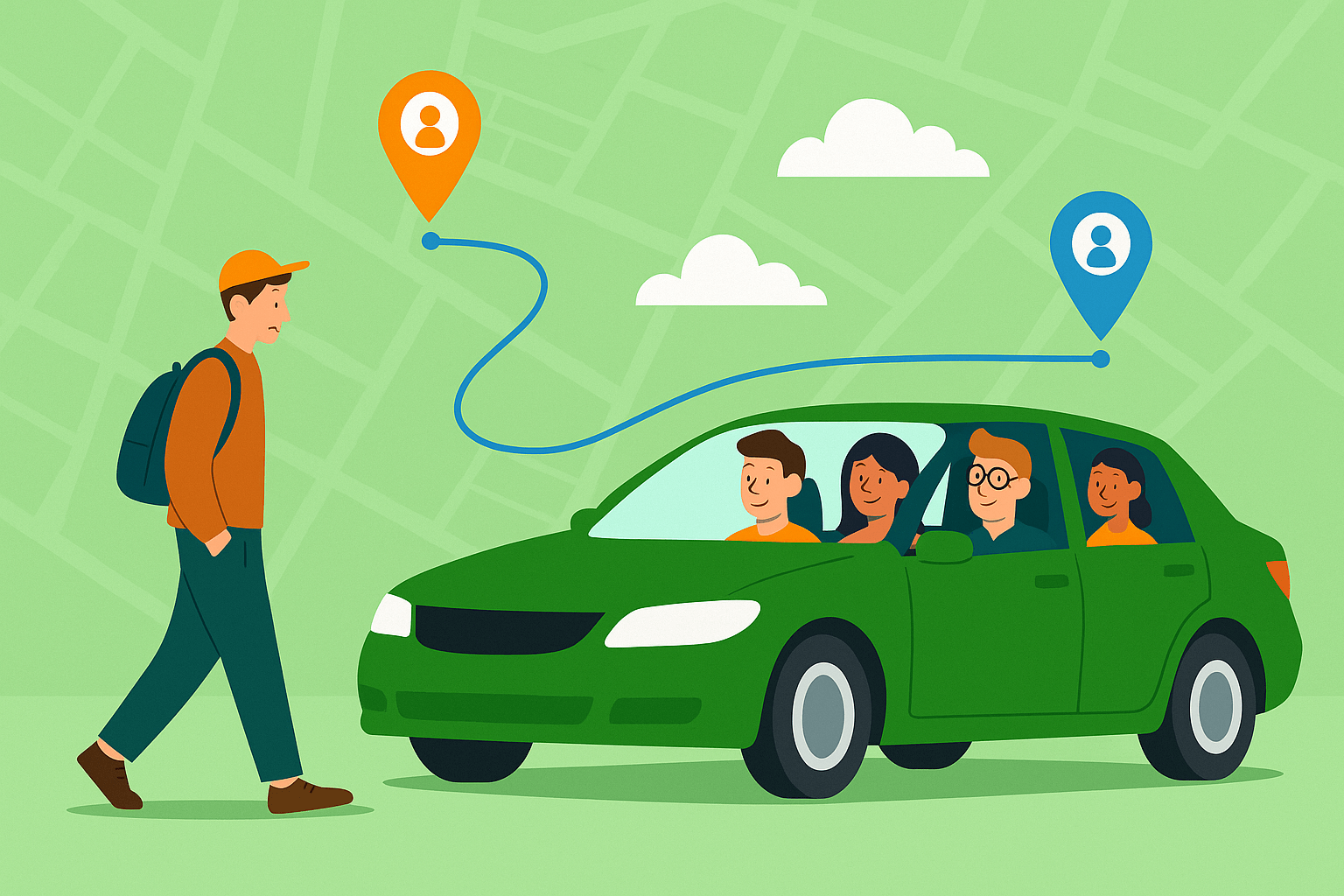
Many Mississauga commuters combine both modes. You can share a quick morning ride with a neighbour to a Lakeshore West GO station rather than fighting for station parking alone, or carpool directly into downtown Toronto on days when you carry heavy bags or finish late.
Tip: Agree on the exact cost contribution in the app before your first commute starts so expectations stay clear and nobody has to handle cash in the car.
4. Calculate Your Daily Commute Costs and Non-Commercial Split
Sharing a vehicle with other commuters is a direct way for Hosts to cut personal fuel consumption and reduce road congestion along busy regional corridors.
FellaRide operates as a peer-to-peer technology marketplace for non-commercial cost-sharing rather than a commercial transport carrier. When a Host driving from Mississauga to a downtown workplace or university divides fuel, Highway 407 tolls, and downtown parking fairly with Guests heading the same way, the Host simply recovers a share of actual operating expenses while still paying their own portion.
Generating a financial profit is strictly prohibited on the platform. You can read our breakdown of how non-commercial carpooling works in Ontario to see how provincial rules protect everyday Hosts who only recover legitimate trip costs under their personal auto insurance.
To keep contributions predictable and aligned with Canadian carpooling norms, FellaRide sets clear cost-sharing guidelines. The platform suggests a $5 minimum contribution per trip (including stops and multi-leg rides) alongside a $0.20/km guideline rate so Hosts can offset shared vehicle expenses without haggling over cash.
5. Match With Verified Neighborhood, Workplace, or Campus Commuters on FellaRide
Searching for a ride partner on anonymous classified boards or open social media pages often feels uncertain because you know very little about the person messaging you. Organizing rides inside verified FellaRide Communities and Trusted Groups connects you with people who share a real-world affiliation, such as a Downtown Toronto office, the University of Toronto, or Sheridan College.
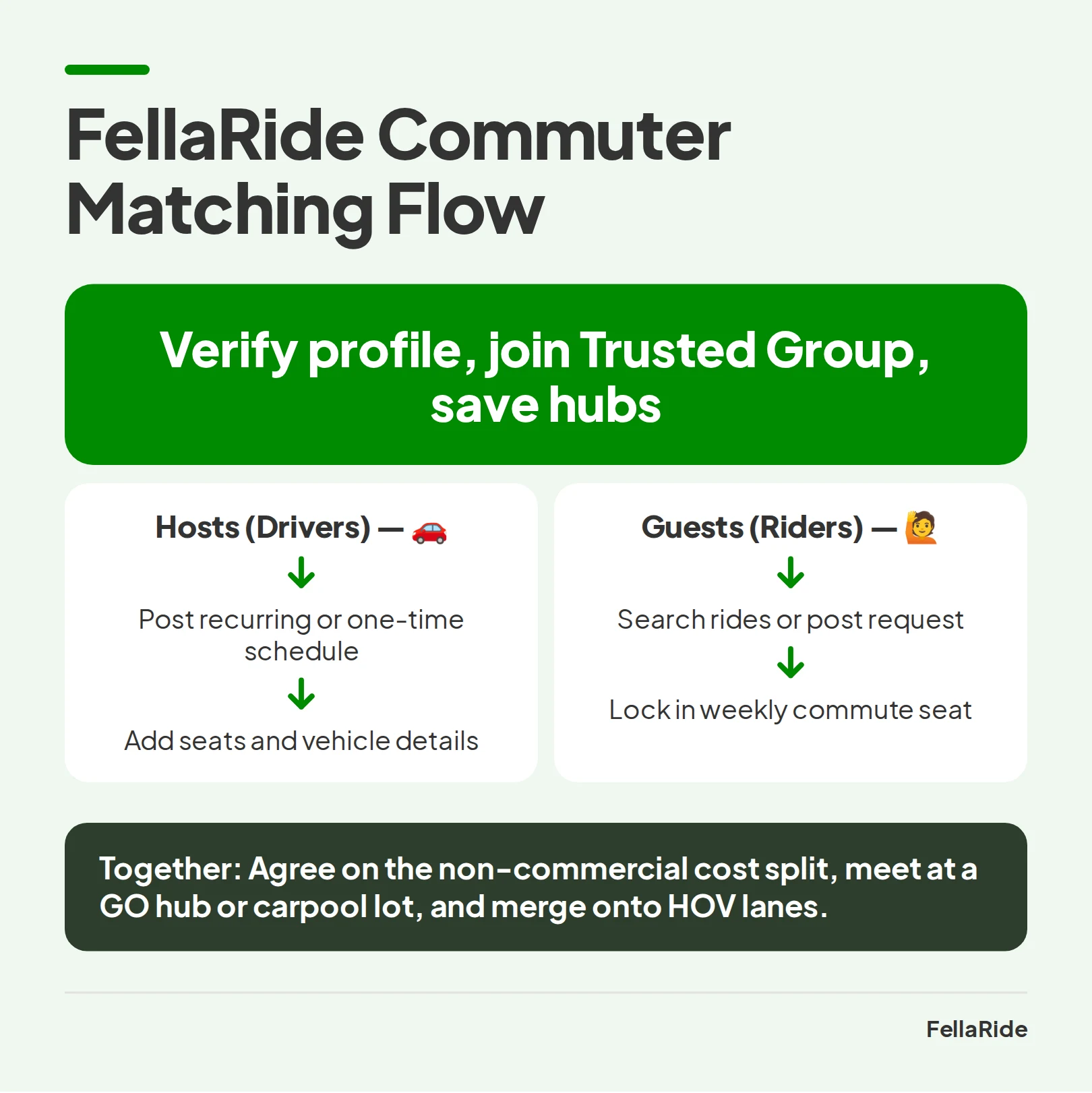
Setting up your Mississauga to downtown Toronto routine on the app follows four straightforward steps:
- Verify your commuter profile: Complete optional identity verification using one-time passcodes and work or campus email domain checks to earn trust badges on your profile.
- Join your Trusted Groups: Enter open, organization-verified, or moderator-controlled groups for your employer, campus, or Mississauga neighbourhood so you match with familiar peers.
- Save your Favorite Places: Store private locations such as your home in Square One, Erin Mills, or Port Credit and your downtown destination to quickly populate route searches and trip postings.
- Post or request your commute: Hosts can publish one-time or recurring ride offers with seat counts, vehicle details, and departure windows, while Guests can search and filter rides or post a Ride Request.
If you travel into downtown Toronto on fixed office days or Tuesday and Thursday lecture blocks, check our guide to scheduling recurring multi-day commutes on FellaRide to lock in a consistent weekly seat.
6. Lock In Your Pickup Hub and Backup Transit Plan
Because Mississauga to downtown Toronto is a high-density travel corridor, Hosts and Guests have plenty of overlapping morning and evening trips to choose from. Still, sharing a vehicle requires coordinating a departure window rather than walking out to your driveway whenever you please.
Choosing a pickup spot right beside a highway ramp or transit terminal keeps the morning drive smooth for everyone in the car:
- Regional GO station kiss-and-ride zones: Stations in Port Credit, Erindale, or Cooksville give Guests a well-lit landmark with direct local transit access if plans change.
- Consistent downtown drop-off points: Agreeing on a central drop-off near a TTC Line 1 subway station or your shared office building avoids slow detours through narrow downtown streets.
Watch out: Confirm your exact pickup landmark and waiting window through in-app messaging the evening before your commute, especially when winter snowstorms are in the forecast.
Before your first shared morning drive, review our ground rules for carpool etiquette so both Host and Guest know how to handle waiting windows, luggage or backpacks, and cabin preferences. If a late work meeting or extended lab keeps you downtown past your Host's departure time, message your partner early in the app and use your backup transit card to catch the GO train home from Union Station.
Learn more about FellaRide
FAQ
How many people do you need in the car to use the Highway 403 and QEW HOV lanes?
Ontario's High Occupancy Vehicle lanes on series 400 highways, including Highway 403 and the QEW, require at least two occupants in the vehicle. Matching one Host and one Guest on FellaRide qualifies your car to bypass single-occupant traffic lanes along these corridors.
How are ride costs calculated between Hosts and Guests on FellaRide?
Hosts and Guests view and agree on the proposed cost split upfront in the app before the trip begins.
What safety and verification tools does FellaRide provide for Mississauga commuters?
FellaRide offers optional identity verification through one-time passcodes and work or campus email domain checks, awarding trust badges to verified profiles. Commuters also benefit from closed Trusted Groups, real-time GPS tracking, in-app messaging, two-way reviews, and in-app dispute reporting.
Do Hosts need a commercial licence to share a commute from Mississauga to Toronto?
As long as the Host is already making the trip for their own work or school schedule and only recovers a fair share of actual fuel, parking, and toll expenses without making a profit, no commercial permit is required. Hosts drive under their standard Ontario Class G licence and personal commuting auto insurance.
Sources
- How Non-Commercial Carpooling Works in Ontario
- GTA University Commuter Guide: Save Time & Money on Rides
Learn more about FellaRide