Regina Transit Strike: Saskatchewan Backup Commute Guide
TL;DR
- A municipal transit strike in Regina shows how quickly single-mode commuters can lose access to daily work shifts and university lectures.
- Non-commercial peer-to-peer carpooling lets verified Hosts and Guests share actual vehicle expenses along busy Regina and Saskatoon corridors without commercial profit.
- FellaRide Trusted Groups replace anonymous social media ride boards with organizational domain checks, optional Persona ID verification, and Multi-Day Scheduling.
- Establishing Green, Yellow, and Red winter departure windows keeps Saskatchewan carpool groups coordinated during snowstorms and schedule changes.
Build Your Backup Commute on FellaRide
Match with verified Hosts and Guests in your workplace or campus Trusted Group to share daily commute costs.
What a Regina Transit Strike Teaches Every Saskatchewan Commuter
Standing at an exposed bus stop along Albert Street or Arcola Avenue while morning wind gusts cross the open prairie drains your energy before your shift or first lecture even begins. When a municipal transit shutdown halts bus service across Regina, thousands of workers and post-secondary students suddenly lose their primary link to work and class.
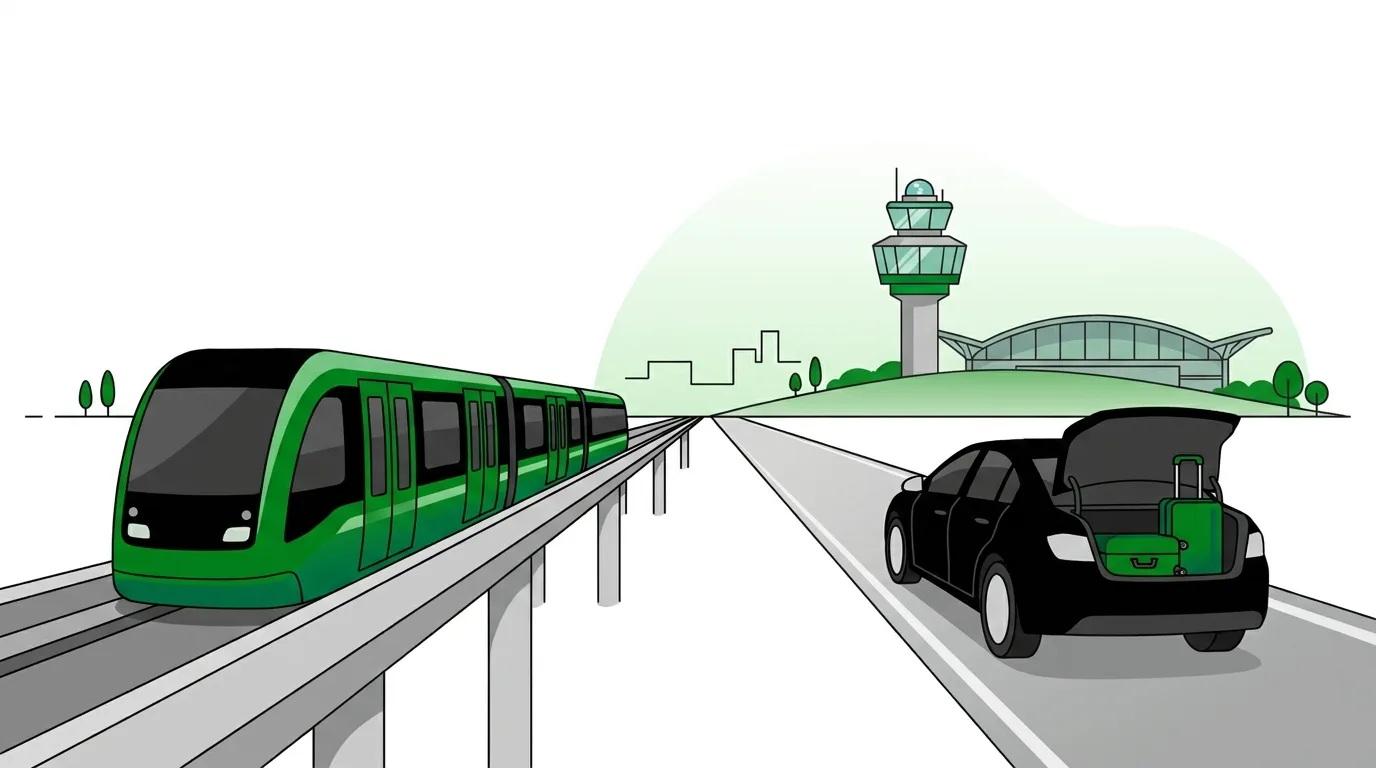
Relying on a single mode of transportation leaves commuters scrambling for expensive last-minute rides whenever labour disputes, severe winter blizzards, or fleet shortages strike.
You can download the FellaRide mobile app to connect with verified Hosts and Guests travelling along your daily corridor for private, non-commercial cost-sharing carpools.
A sudden municipal transit disruption exposes three immediate vulnerabilities for single-mode commuters:
- Frozen surface corridors: Arterial routes clog quickly when regular bus riders switch to solo vehicles during morning rush hour.
- Scarce commercial cars: Taxis and on-demand ride-hailing vehicles face long wait times when an entire city books trips at 8:00 AM.
- Missed shifts and labs: Hourly workers and university students lose income or academic standing when they cannot reach workplaces or campuses on time.
Planning your alternative transit network ahead of a service halt prevents morning panic at the curb. When neighbors and coworkers establish shared corridor routines beforehand, empty vehicle seats already moving along major city arteries absorb sudden commute demand smoothly.
Why Saskatoon and Other Saskatchewan Cities Need a Backup Commute Plan
What happens in Regina rarely stays confined to one municipality. Commuters in Saskatoon, Prince Albert, Moose Jaw, and surrounding suburban corridors face the exact same vulnerability whenever fixed-route bus networks experience service reductions or mechanical delays.
Sharing a ride directly between suburbs or along busy arteries fills the gaps that fixed-route buses cannot always cover.
You do not have to choose exclusively between municipal buses and shared private vehicles on normal service days. Many post-secondary students and urban professionals combine a transit pass with targeted cost-sharing rides on days when transfers bog down or schedules split across multiple locations.
Commuters across Saskatchewan can build a resilient hybrid travel routine around three primary regional patterns:
- Regina arterial corridors: Matching with a Host along Ring Road, Albert Street, or Arcola Avenue to reach downtown offices or the University of Regina.
- Saskatoon bridge and campus routes: Pairing up across Circle Drive, Idylwyld Drive, or 8th Street to reach the University of Saskatchewan or Saskatchewan Polytechnic.
- Suburb-to-city and Highway 11 links: Connecting commuters travelling from Lumsden, White City, Emerald Park, Martensville, or Warman directly into urban employment hubs.
Comparing Transit Shutdown Backups: Solo Driving, Taxis, and Peer-to-Peer Carpooling
No single transportation mode works for every trip, so realistic commuters weigh the trade-offs of each backup option before committing to a daily routine. When buses stop running, your choice comes down to cost structure, schedule alignment, and legal definitions.
Adjusting your morning routine to meet a Host at a designated pickup spot requires mutual courtesy and clear communication.
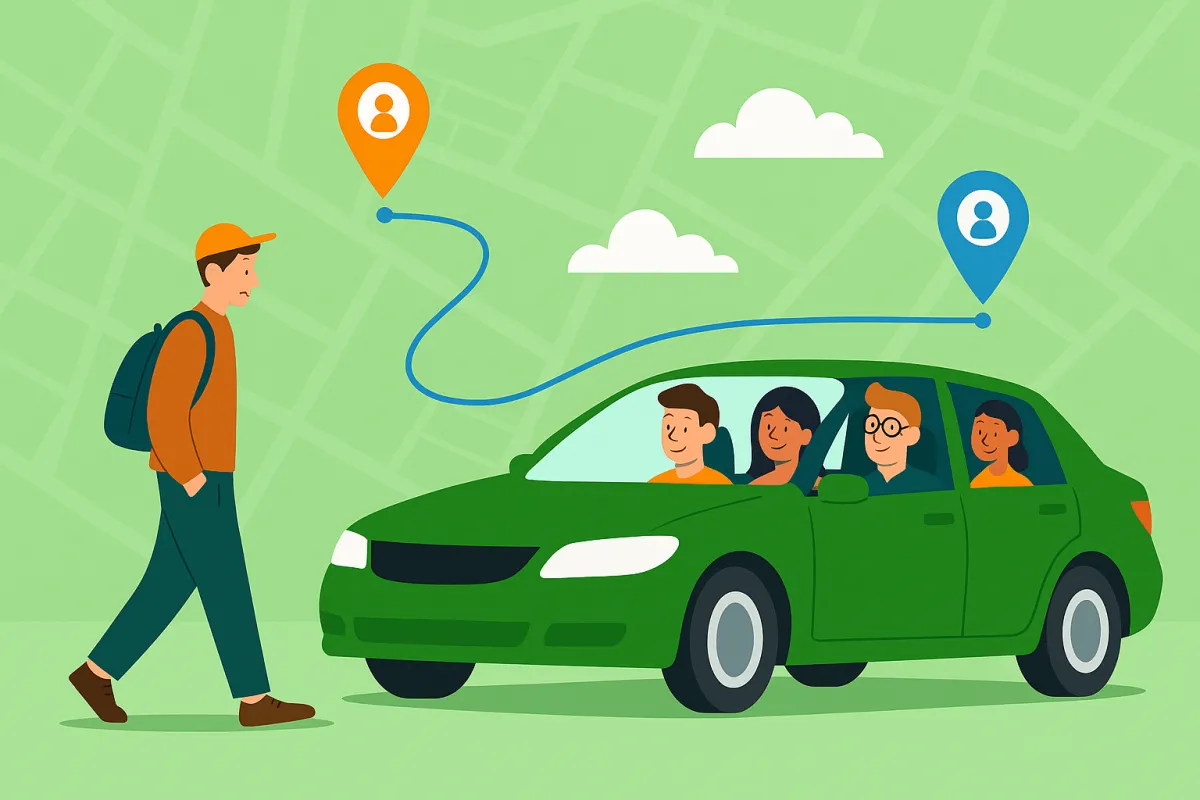
In commercial ride-hailing or taxi driving, the customer chooses the destination and the operator makes the trip to earn an income. By contrast, FellaRide Hosts are verified private vehicle owners who share empty seats during a planned trip to offset expenses without making a profit, and Guests contribute toward shared travel costs.
- Shared origin and destination: The Host and Guests travel between a common starting area and destination as part of the Host's own planned trip.
- Smartphone coordination: Participants use a compatible smartphone with active GPS location services and mobile data to browse routes, message partners, and manage bookings.
Why Verified Community Carpooling Outperforms Informal Ride Boards
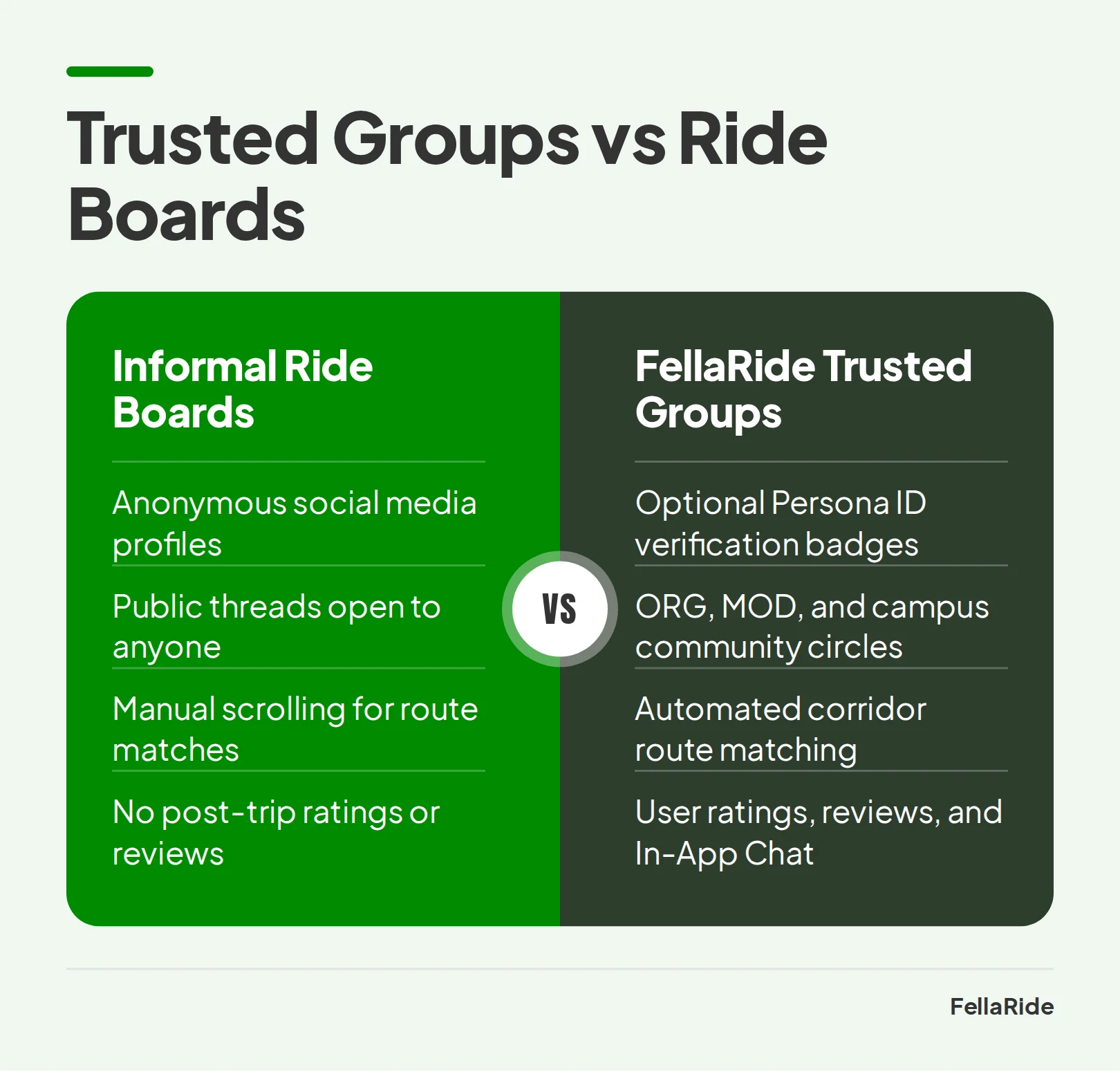
During a sudden transit strike, thousands of stranded riders rush to unmoderated social media threads or anonymous classified ads looking for a seat.
On FellaRide, verified individuals aged 18 or older on iOS and Android can complete optional identity verification through Persona using a government-issued ID to earn verification badges. Members then organize and discover rides inside closed or semi-private communities and Trusted Groups where participants share a workplace, campus, or neighbourhood affiliation.
FellaRide structures its community circles into four distinct access levels:
- Organizational (ORG): Restricted communities requiring verification of an approved organization email domain for workplaces or universities.
- Moderator-Controlled (MOD): Private circles requiring explicit administrator or moderator approval before admission.
- Global (Open): Open communities that any verified user can join directly without domain checks or administrator approvals.
- Interest Based Communities: Open groups built around shared interests like sports or music, requiring no domain checks or approvals.
Tip: Ask every Guest to arrive at the pickup landmark a few minutes before your departure window and use live location tracking so nobody stands outside in sub-zero prairie wind.
How FellaRide Connects Hosts and Guests Across Regina and Saskatoon Corridors
In high-density corridors connecting residential subdivisions to downtown hubs or university campuses, automated matching removes the manual legwork of finding a commuting partner.
Platform matching effectiveness also depends on commuter clustering and travel hours. While busy morning and afternoon corridors offer plenty of overlapping trips, commuters traveling from lower-density rural towns or during off-peak shifts should plan and post their trips further in advance.
Checking the FellaRide carpool app features and exploring the FellaRide in-app experience shows how Hosts and Guests coordinate one-time or recurring multi-day trips. Users can also save private Favorite Places such as home, campus, or work in their profile to accelerate daily ride posting and searches.
The mobile platform gives Saskatchewan commuters six core tools to plan, match, and ride together:
- Post a Ride: Hosts create one-time or recurring multi-day rides with specific routes, stops, times, available seats, vehicle details, and preferences for selected communities.
- Search a Ride: Guests filter available rides within their Trusted Groups by route, date, time, schedule, and community.
- Post a Ride Request: Guests who cannot find an existing match publish a request visible to Hosts and Guests in their communities.
- Multi-Day Scheduling: Commuters set up recurring trip schedules for regular weekday work shifts or semester lecture timetables.
- In-App Chat: Hosts and Guests message directly to coordinate pickup details and agree on cost-sharing terms before trip confirmation.
- Built-In Maps and Real-Time Tracking: Participants view trip routes, designated pickup points, live navigation, and GPS-enabled ride tracking inside the app.
How to Build Your Daily Backup Commute Routine for Prairie Weather and Schedule Changes
Setting up a carpool routine before a transit shutdown or winter storm hits takes about 15 minutes of planning time.
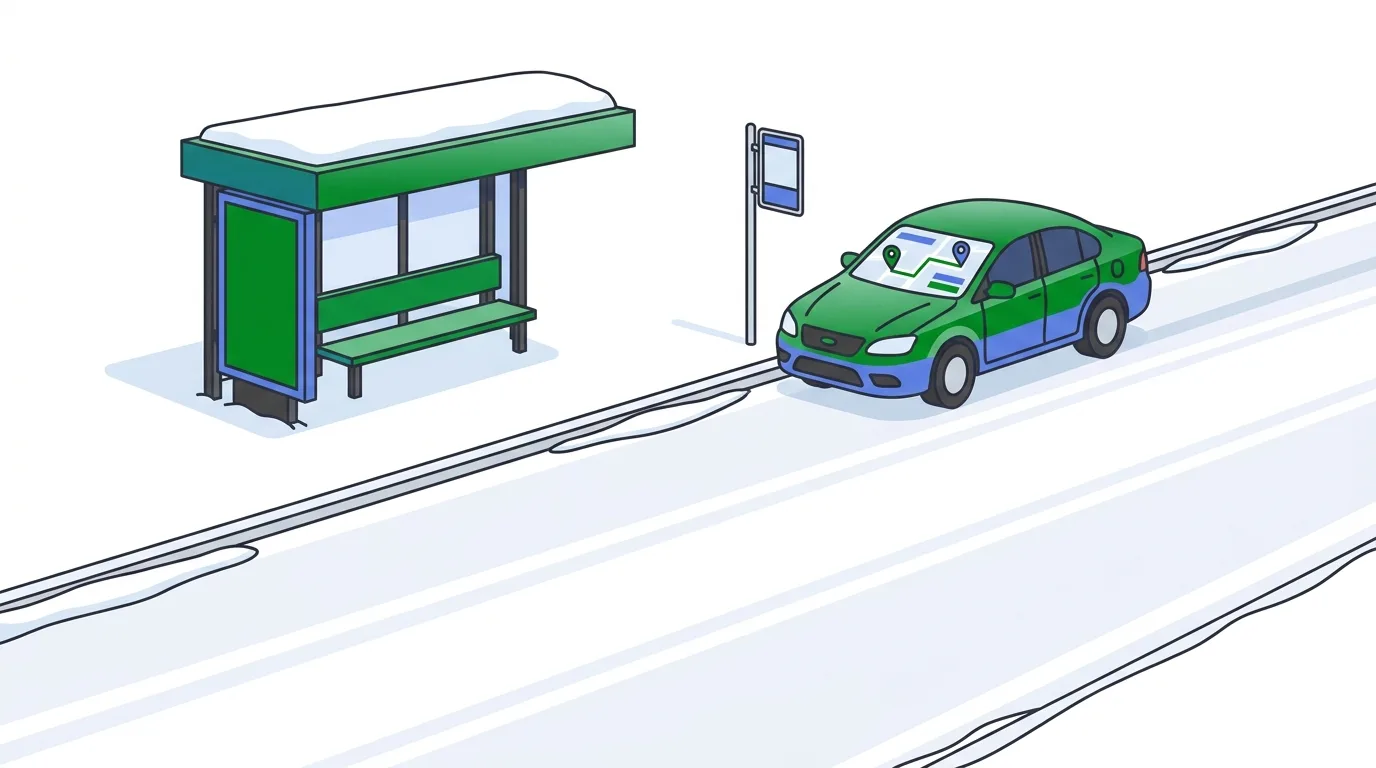
Within your carpool group, Hosts should also equip the vehicle with fresh wiper blades, low-temperature washer fluid, and a highway survival trunk kit, while selecting alternate pickup spots on plowed arterial streets so no Guest waits on an unplowed residential crescent.
Gather Your Essentials Before You Match
- Your finalized timetable: List exact start and end times for work shifts, lectures, tutorials, and labs across all locations.
- A verified FellaRide account: Create your profile on iOS or Android (available to individuals aged 18 or older) and join your campus or workplace Trusted Group.
- A government-issued ID: Keep your identification ready if you choose to complete optional identity verification through Persona.
- A backup transit card or pass: Keep your local transit pass in your bag so you can combine bus trips and shared rides once regular municipal service resumes.
Set Up Three Tiered Winter Departure Windows
Follow a Morning and Afternoon Communication Timeline
- 6:15 AM Group Status Call: The Host posts Green, Yellow, or Red in the group chat so every Guest knows which window applies.
- Rolling Curb Updates: The Host shares live location tracking upon leaving home so Guests step outside two minutes before arrival rather than standing in sub-zero wind for ten minutes.
- 1:30 PM Afternoon Check-In: The group checks afternoon storm radar or potential overtime early in the afternoon so Guests can adjust evening travel plans if a Host gets stuck late at work.
Hand navigation and group messaging duties to the front-seat Guest as soon as the first rider boards the car, and always confirm your exact pickup landmark the evening before a morning trip.
You can get the FellaRide app on iOS and Android today to verify your profile, save your Favorite Places, and match with neighbours along your corridor.
Ready to Share Your Daily Saskatchewan Commute?
Download FellaRide on iOS or Android to post or search one-time and recurring multi-day carpools.
FAQ
Is non-commercial carpooling on FellaRide different from commercial ride-hailing?
Yes. FellaRide connects Hosts and Guests for private, non-commercial cost-sharing carpools where the Host already has a personal trip planned to work or campus. Guests simply contribute a fair share toward actual vehicle operating costs so the Host offsets expenses without making a profit.
Who can join a FellaRide Trusted Group in Saskatchewan?
Any individual aged 18 or older can create a FellaRide account on iOS or Android and complete optional identity verification through Persona using a government-issued ID. Members can join Global (Open) and Interest Based Communities directly, or enter Organizational (ORG) and Moderator-Controlled (MOD) groups through an approved email domain or moderator approval.
What happens if my regular carpool Host gets stuck late at work?
Commuters should communicate potential overtime early in the afternoon, such as during a 1:30 PM check-in, so Guests have time to adjust their evening return plans. Guests can search for another available seat within the same workplace or campus Trusted Group or post a ride request visible to community members.
Can I schedule recurring rides for a full workweek or university semester?
Yes. FellaRide supports Multi-Day Scheduling so Hosts and Guests can set up recurring carpools for regular daily commutes as well as one-time trips. Saving your home, campus, or workplace in Favorite Places makes posting and searching recurring corridor matches much faster.
Sources
- The Daily — Commuting in Canada during the pandemic: Census of Population, 2021
- Driving safely in winter
Ready to Share Your Daily Saskatchewan Commute?
Download FellaRide on iOS or Android to post or search one-time and recurring multi-day carpools.