Brampton to Toronto & Mississauga Carpool: Hwy 410 HOV
TL;DR
- Vehicles carrying at least two people (one Host and one Guest) or displaying valid green plates can use Highway 410 and 403 HOV lanes.
- Provincial carpool lots at highway interchanges let Brampton commuters park an extra car for free and merge directly onto HOV corridors.
- Shared rides bridge the first-mile and cross-suburb transit gaps to Pearson Airport business parks, Meadowvale offices, and regional campuses.
- FellaRide recommends a $5 minimum contribution and $0.20/km guideline so Hosts recover shared travel costs without making a commercial profit.
- Hosts and Guests can verify their profiles, save Favorite Places, and match inside workplace, campus, or neighbourhood Trusted Groups on FellaRide.
Learn more about FellaRide
Why the Brampton to Mississauga and Toronto Corridor Bottlenecks
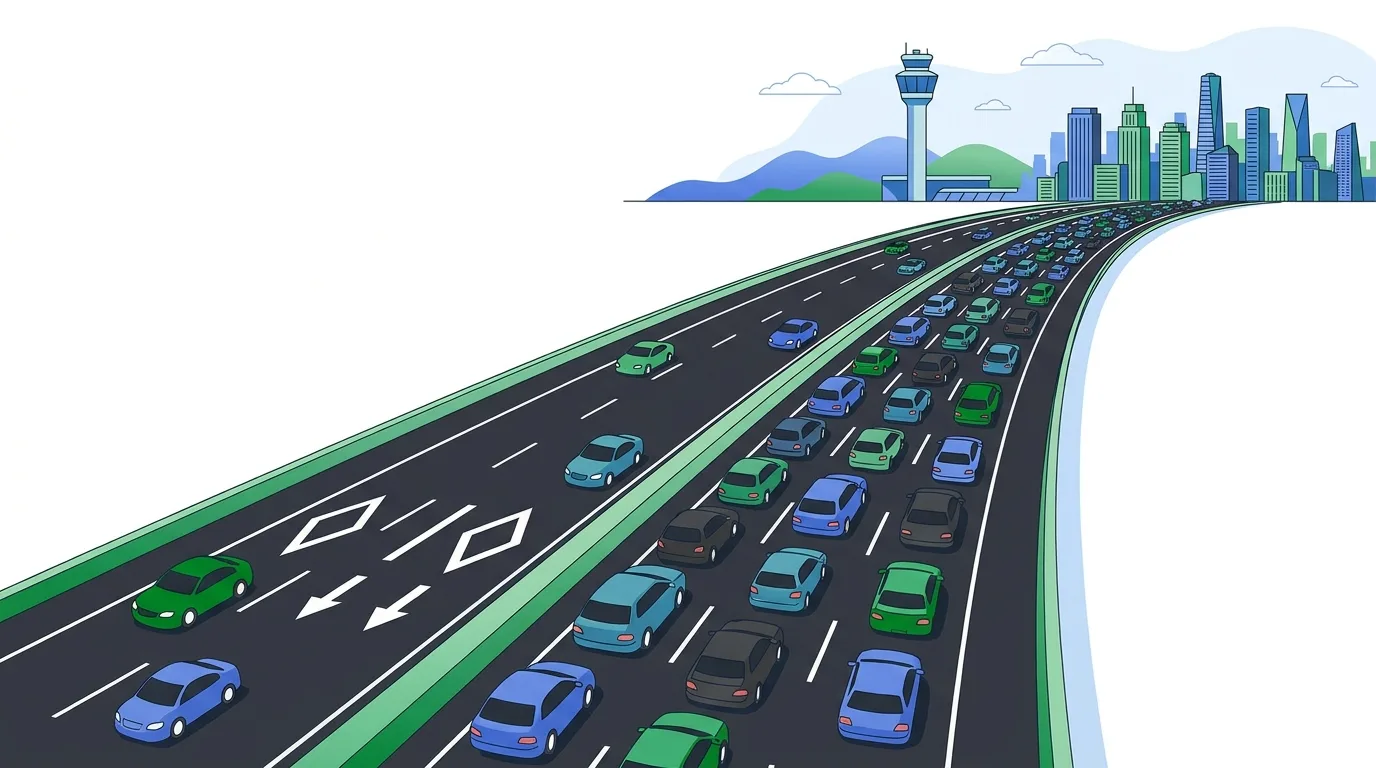
Pulling onto Highway 410 south during the weekday morning rush quickly tests any commuter's patience. Thousands of solo vehicles funnel from Brampton subdivisions toward the Highway 401 and Highway 403 interchanges at the exact same hour. Because so many cars carry only one person, the general traffic lanes slow to a crawl well before Mississauga.
Office attendance patterns make mid-week travel even tighter across Peel Region and Toronto. When hybrid teams schedule their in-office days on Tuesdays, Wednesdays, and Thursdays, surface lots at Mississauga office parks fill early and highway ramps back up. A structured employee carpool program in the GTA helps workplaces ease this parking crunch while cutting single-occupant traffic.
Post-secondary students face similar delays when travelling between Brampton and regional campuses. A student heading to an early class at the University of Toronto St. George campus or Toronto Metropolitan University faces a very different trip than someone commuting to Peel campuses. Mapping out GTA university commuter corridors shows where highway bottlenecks and transit transfers add extra time.
Daily trips out of Brampton generally split into four major destination zones across the region:
- Pearson Airport employment zone: Logistics hubs, terminal jobs, and corporate offices flanking Highway 401 and Highway 427.
- Mississauga business parks: Suburban corporate centres in Meadowvale and along the Highway 401 and Highway 403 corridors.
- Peel and Halton campuses: Sheridan College Davis in Brampton, Hazel McCallion in Mississauga, and U of T Mississauga via Highway 401, Highway 403, and Hurontario Street.
- Downtown Toronto core: Financial district offices and universities reached via the Kitchener GO rail line or the Gardiner Expressway.
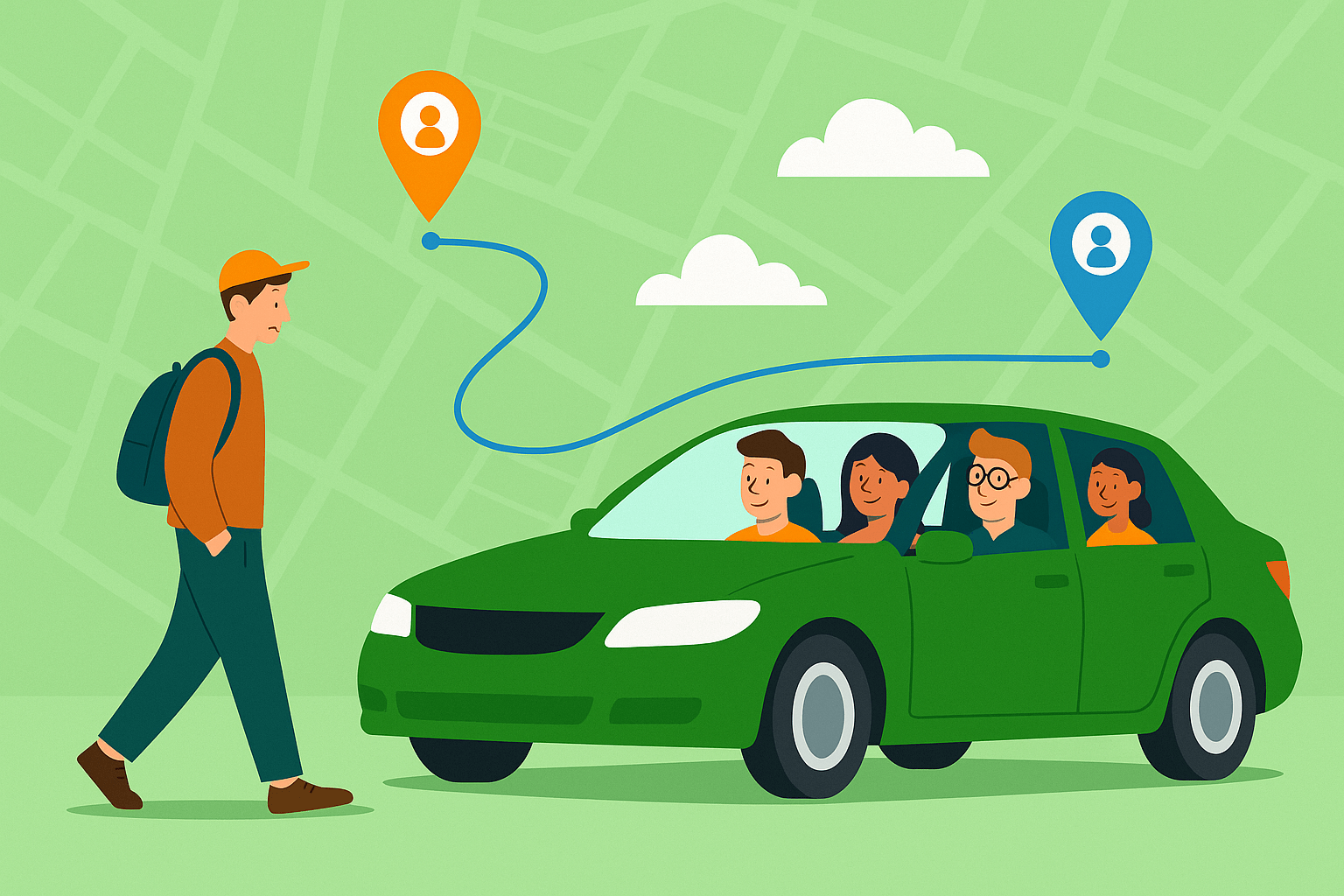
Because the corridor connecting Brampton, Mississauga, and downtown Toronto has high commuter density, many neighbours travel along the exact same roads at the same time. Pairing a Host who already drives the route with a Guest heading the same way fills empty seats and unlocks dedicated highway infrastructure.
How the Highway 410 HOV Lanes and Provincial Carpool Lots Work
Sharing your morning commute gives you legal access to the dedicated lanes on 400-series highways across the Greater Toronto Area.
Understanding how non-commercial carpooling works in Ontario helps you avoid traffic tickets while using these lanes. Provincial police enforce strict occupancy and lane-crossing rules along the Highway 410 and Highway 403 corridors.
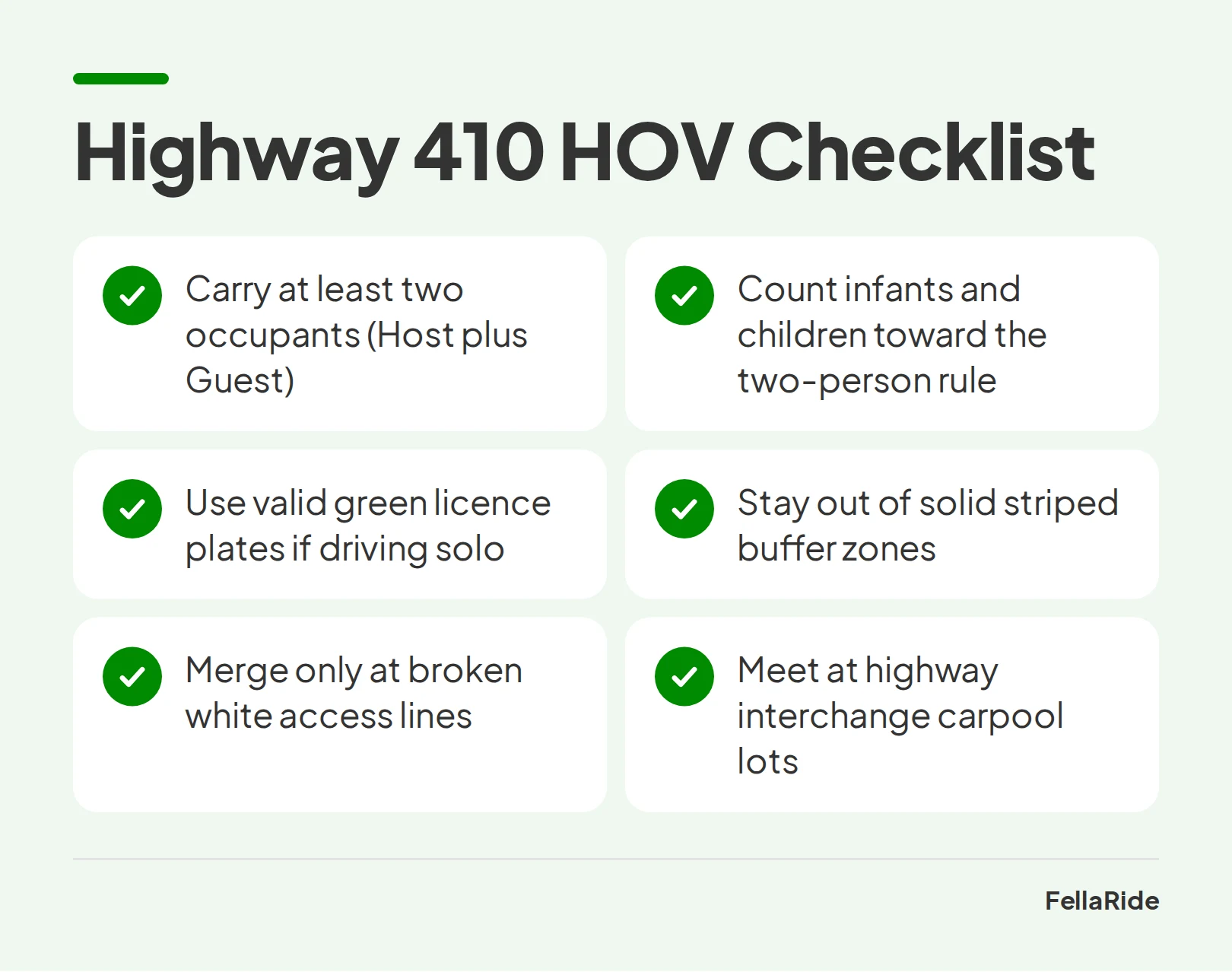
Every Host on Highway 410 needs to follow four core provincial HOV regulations:
- Two-person minimum occupancy: You need at least two human occupants in the car (one Host and at least one Guest) unless your vehicle has valid green licence plates or a provincial permit.
- Every human occupant counts: Children and infants riding in car seats count toward the two-person minimum requirement just like adults.
- Solid striped buffer zones: Never weave across the solid double lines or striped pavement markings that separate the HOV lane from general traffic.
- Broken white merge lines: Enter and exit the HOV lane only at official access zones marked by broken white lines.
Instead of winding through slow residential crescents for home pickups, carpoolers can meet at provincial carpool parking lots located right beside major highway interchanges. These free lots let a Guest park a second car safely, step into a Host's vehicle, and merge straight onto the highway together.
Kitchener GO Line vs Shared Rides to Pearson Business Parks and Downtown
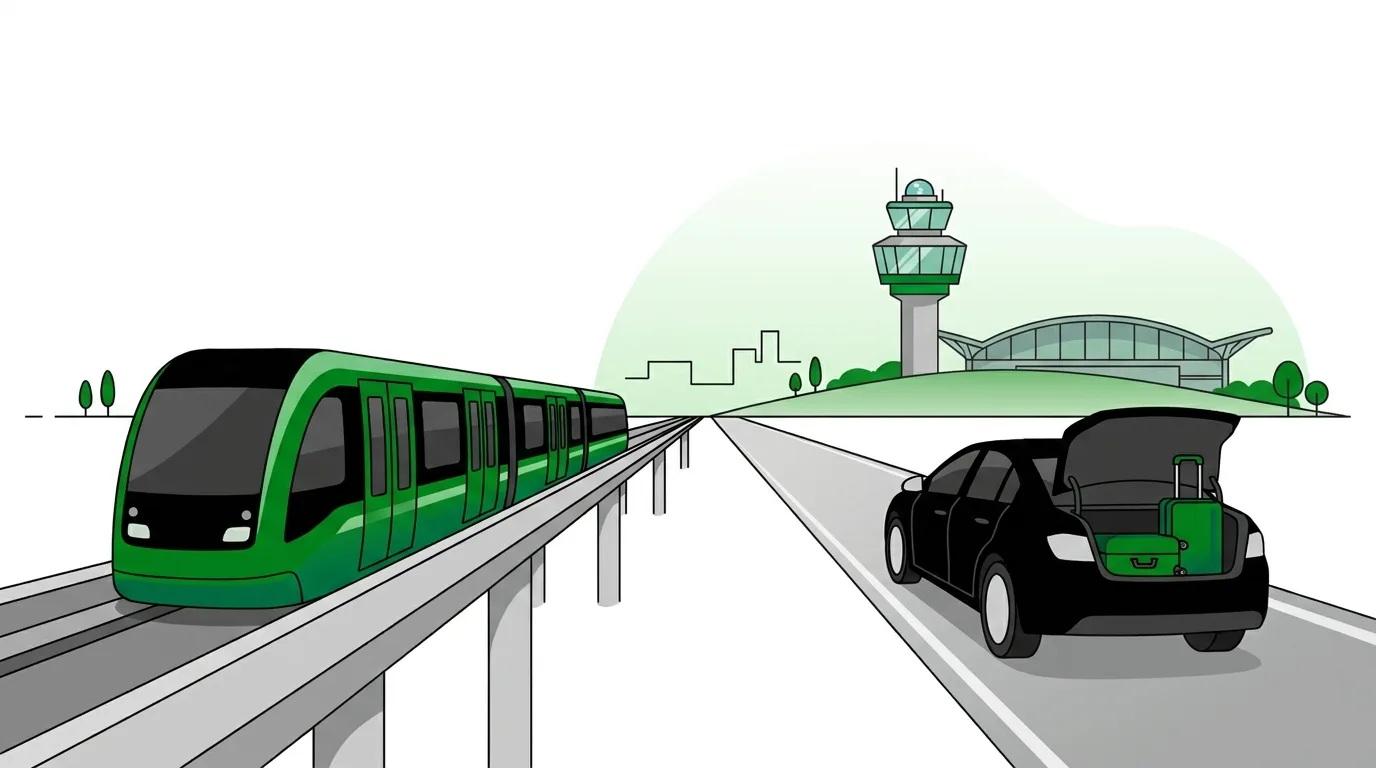
Public transit and peer carpooling serve different parts of the Peel commute. When you work or study in downtown Toronto near Union Station, the Kitchener GO rail line moves you directly into the core without sitting on the Gardiner Expressway.
Rail travellers heading toward the airport corridor also use the Kitchener rail line between Union Station, Bloor, and Weston before connecting into the terminals. Once inside the airport complex, the free Terminal Link train runs around the clock between Terminal 1, Terminal 3, and Viscount station, as detailed in our guide to downtown Toronto to Pearson Airport travel options.
Fixed rail lines cannot cover every suburban employment zone or off-peak university schedule. Many Brampton commuters face a stubborn first-mile and last-mile gap when their home is too far to walk to a GO station, or when their workplace sits in a Mississauga industrial park far from train tracks.
Relying solely on local buses across municipal boundaries between Brampton, Mississauga, and Toronto can strain both your schedule and your wallet:
- Long transfer waits: Off-peak evening labs or midday breaks often force students into two-hour transit transfers across municipal boundaries.
- Cross-boundary fare stacking: Travelling across separate municipal transit systems can trigger extra fare legs depending on your route and pass.
- Emergency ride-hail bills: A delayed feeder bus before an exam or warehouse shift can force you into a pricey commercial ride-hail trip with surge pricing.
- Lost shift hours: Arriving late to a part-time hospitality, retail, or logistics job because of a missed connection can cost you scheduled pay.
Peer-to-peer carpooling works alongside public transit to plug these exact suburban gaps. Commuters can share a direct suburb-to-suburb ride down Highway 410 to Meadowvale or Pearson business parks, or share a short morning ride to a regional rail station instead of hunting for scarce station parking alone.
Non-Commercial Carpooling vs Commercial Ride Sharing Companies in Ontario
Many commuters wonder how sharing a ride on a community platform differs from booking an on-demand cab or ride-hail car. In Ontario, the legal distinction comes down to Host intent, route control, and whether the person behind the wheel is making a financial profit.
FellaRide operates as a peer-to-peer technology marketplace for non-commercial cost sharing, not as a commercial transit service. A Host is a private commuter who is already driving to work or school and offers empty seats to Guests travelling along the same route.
- Shared trip purpose: Both the Host and Guest are moving between a common starting area and destination that the Host already planned to visit.
- Expense recovery only: Guests only reimburse a fair share of fuel, Highway 407 tolls, parking fees, and reasonable vehicle wear, with zero profit.
- Standard licensing and insurance: Because no profit is made, the Host drives under a standard Ontario Class G licence and a personal auto insurance policy rated for commuting.
To keep reimbursements fair and transparent, FellaRide provides clear cost-sharing guidelines on the platform.
Tip: Agree on your exact cost contribution through the platform before your first morning trip starts so nobody has to haggle over cash in the car.
How Brampton Hosts and Guests Match Through Trusted Groups on FellaRide
Finding a reliable carpool partner used to mean pinning a paper note to a campus bulletin board or asking around an office breakroom. Those informal setups fell apart the moment a coworker changed shifts or called in sick.
FellaRide turns that habit into a structured routine for adult commuters aged 18 and older by combining automated route matching, built-in navigation, and community verification.
Instead of matching with unverified strangers, FellaRide organizes commuters into Communities and Trusted Groups based on shared context:
- Organizational (ORG) communities: Restricted groups where employees or post-secondary students verify an authorized workplace or campus email domain.
- Moderator-Controlled (MOD) communities: Private or semi-private neighbourhood and regional groups that require administrative approval before you join.
- Global (Open) communities: Open regional corridors that verified users can join without domain validation.
- Interest Based Communities: Unrestricted groups built around shared hobbies, sports, or activities.
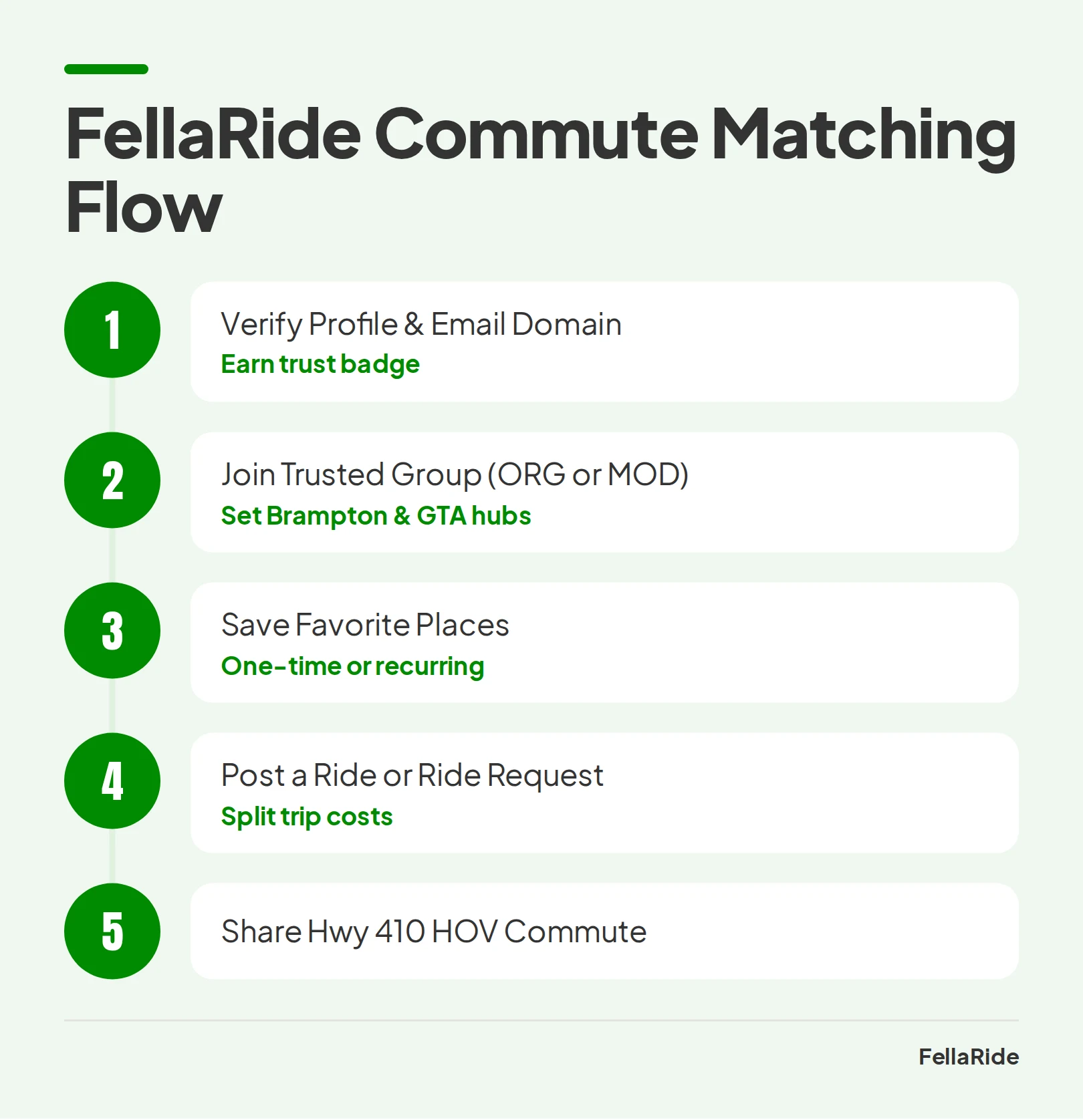
Setting up a one-time or recurring Brampton commute on FellaRide follows five simple steps:
- Verify your profile: Complete optional identity checks using one-time passcodes and work or school email domain verification to earn trust badges.
- Join your Trusted Groups: Enter your campus, workplace, or Peel neighbourhood community to browse peers on your corridor.
- Save your Favorite Places: Store personal locations like your Brampton home, highway carpool lot, or Mississauga office to speed up daily searches.
- Post a Ride or Ride Request: Hosts publish one-time or recurring schedules with custom stops, available seats, vehicle details, and ride preferences, while Guests can search rides or post a Ride Request.
- Coordinate and travel: Confirm your pickup landmark in the app and use built-in route mapping to complete the trip together.
Watch out: Confirm your exact pickup landmark and waiting window in the app the evening before your drive, especially when winter snow squalls are in the forecast.
Year-Round Pickup Etiquette and Winter Backup Plans on Peel Highways
Sharing a vehicle involves a daily balance between cost savings and schedule discipline. Unlike walking out to your own driveway whenever you please, a successful carpool relies on predictable departure windows and mutual respect between Host and Guest.
That coordination matters even more when November snow squalls or freezing rain hit Peel Region and slow Highway 410 and Highway 401 to a crawl. Reviewing our guide on preparing your GTA carpool for winter weather helps your group set clear rules before temperatures drop below freezing.
Locking in five practical habits keeps your Brampton carpool running smoothly in every season:
- Plowed arterial pickup spots: Meet at main-road corners, GO station kiss-and-rides, or interchange carpool lots when residential crescents are buried in snow.
- Evening landmark confirmation: Double-check your exact pickup spot and waiting window in the app the night before a morning drive.
- Morning check-in deadlines: Use a clear message routine before dawn so no Guest is left waiting at a freezing curb if plans change.
- Winterized vehicle prep: Ensure the car has dedicated winter tires, fresh wiper blades, low-temperature washer fluid, and a trunk survival kit.
- Backup return plans: Discuss ahead of time how you will handle an unexpected late office meeting or a university lab that runs overtime.
If a ride dispute, policy violation, or safety concern ever comes up, FellaRide includes In-App Dispute Reporting so you can alert support directly from your phone. Clear communication and verified community groups turn the daily Highway 410 drive into a calmer, shared routine.
Ready to share your Brampton commute?
Post a one-time or recurring ride as a Host or request a seat as a Guest with FellaRide.
FAQ
How many people do you need in a car to use the Highway 410 HOV lane?
Ontario's provincial HOV lanes on Highway 410 require at least two human occupants inside the vehicle, meaning one Host and at least one Guest. Children and infants in car seats count toward this two-person minimum. Solo motorists can only enter the lane if they drive an eligible vehicle displaying valid Ontario green licence plates or a provincial permit.
Does standard Ontario auto insurance cover carpooling from Brampton to Toronto?
Charging fares above actual trip costs turns the drive into a commercial service, which requires commercial insurance and municipal licensing.
How much do Guests contribute for a shared ride on FellaRide?
FellaRide recommends a minimum contribution of $5 per ride (including stops and multi-leg trips) along with a guideline rate of $0.20/km. This structure helps a Host offset shared travel costs while still paying their own share of the commute. Profit is strictly prohibited on the platform.
Who can join Trusted Groups on FellaRide?
FellaRide users must be 18 years or older to use the platform. Depending on the community type, commuters can join Global (Open) groups, Interest Based Communities, Moderator-Controlled (MOD) groups that require admin approval, or Organizational (ORG) groups verified through a workplace or post-secondary email domain.
Sources
- Fuel-efficient driving techniques
Ready to share your Brampton commute?
Post a one-time or recurring ride as a Host or request a seat as a Guest with FellaRide.