App-Based Carpooling Pros and Cons for GTA Commuters
How Technology Transforms Informal Ride-Sharing into Smart Mobility
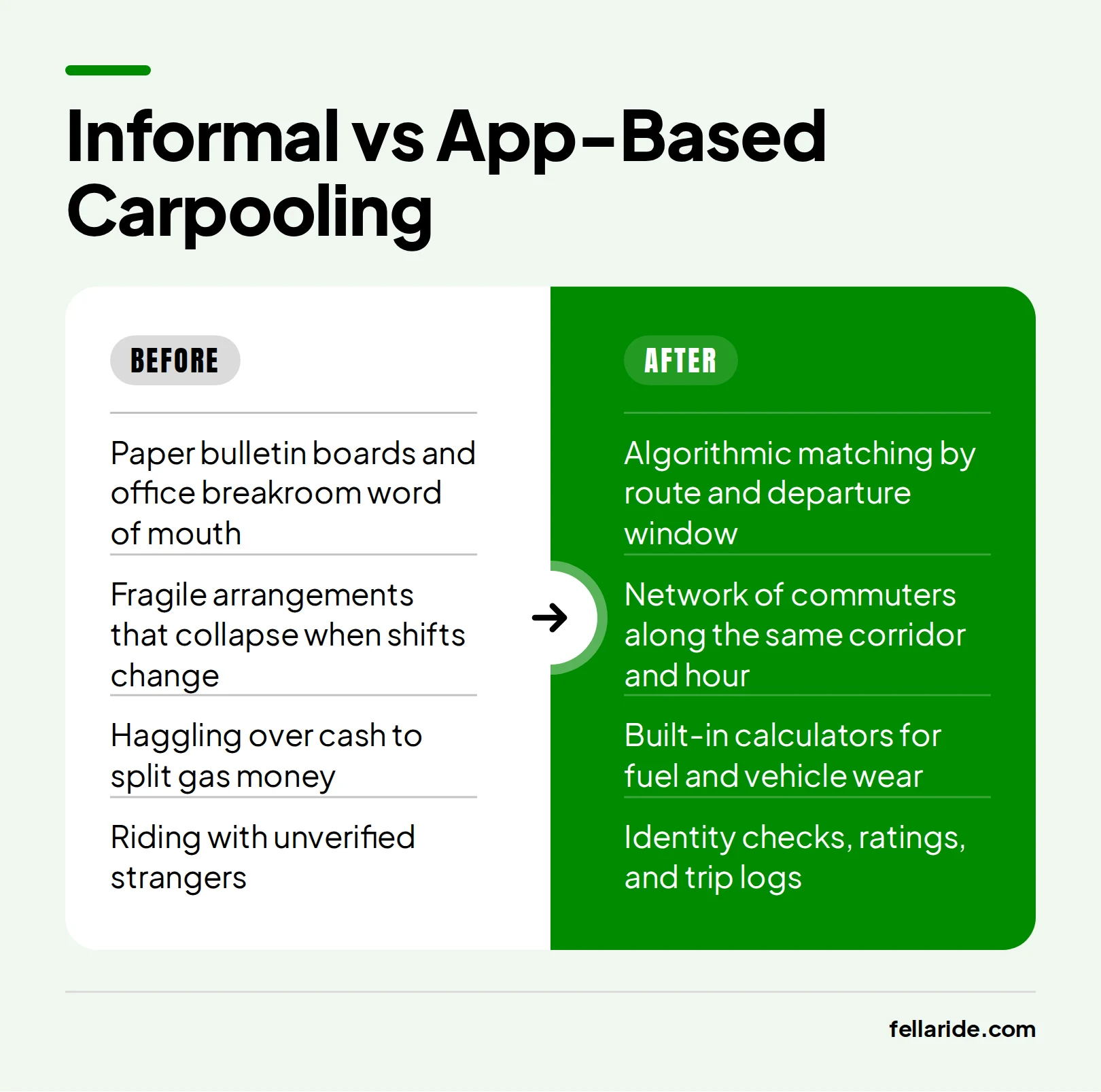
Sitting in bumper-to-bumper traffic along Highway 401 or the Gardiner Expressway with three empty seats is a familiar routine for many Greater Toronto Area drivers. For decades, sharing a ride meant tacking a paper note onto a campus bulletin board or asking around the office breakroom. Those informal arrangements helped neighbours split gas money, yet they often fell apart the moment someone called in sick or changed shifts.
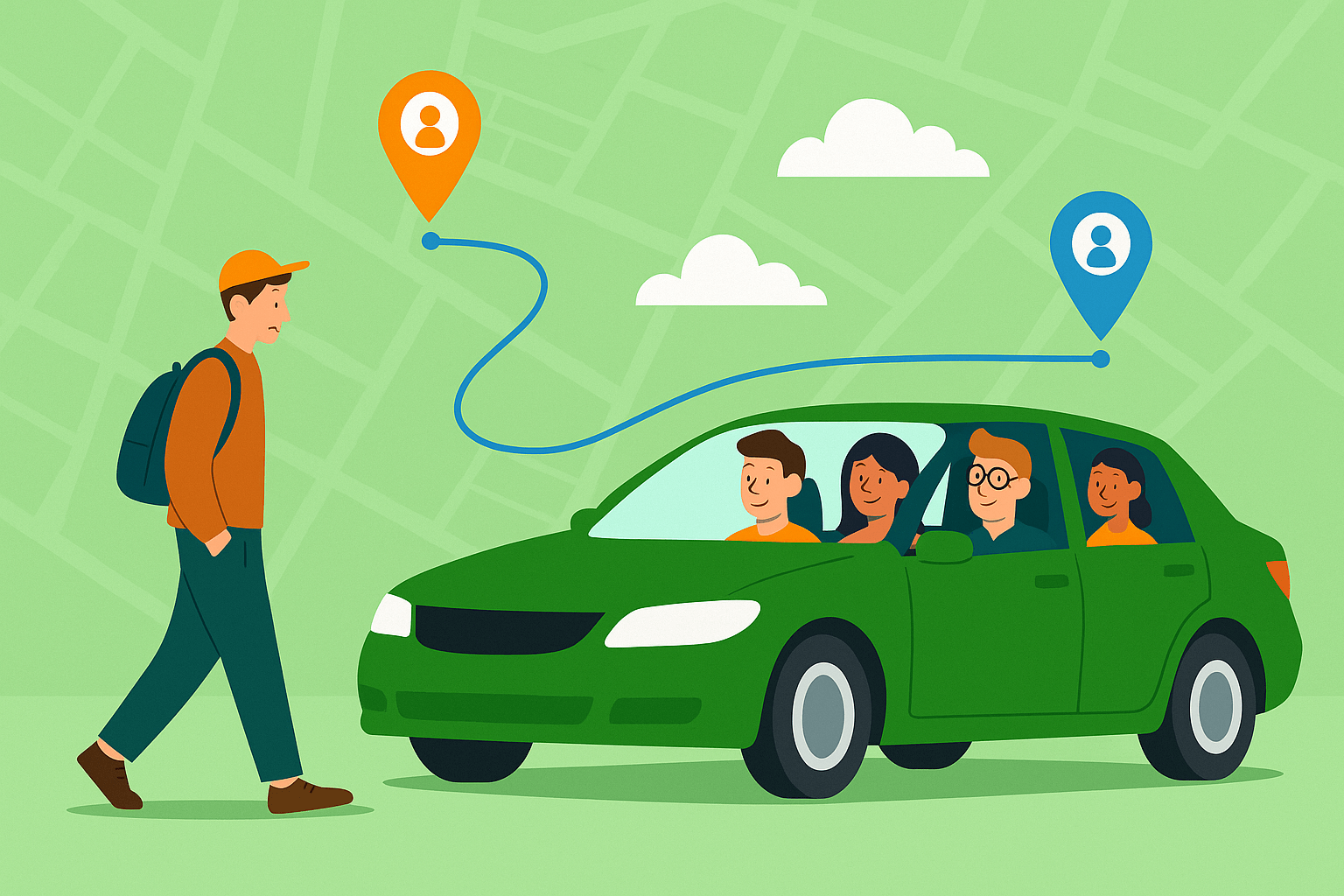
Modern software has reshaped that casual favour into a structured mobility service backed by data, automated routing, and digital trust tools. Instead of relying on word of mouth, commuters use mobile applications to find drivers and passengers already heading along the same corridor at the same hour.
According to Natural Resources Canada's fuel-efficient driving guide, sharing a ride with others is a direct way for drivers to cut personal fuel consumption and reduce road congestion.
Moving from casual arrangements to a dedicated digital network solves three common frustrations that used to hold everyday ride-sharing back:
- Automated route matching: Algorithms pair drivers and passengers who share similar origin points, destinations, and departure windows across busy regional corridors.
- Transparent cost splitting: Built-in calculators divide fuel and vehicle wear fairly so nobody has to haggle over cash at the end of a trip.
- Verified commuter profiles: Digital identity checks, ratings, and trip logs replace the uncertainty of getting into a car with an unverified stranger.
Even with smart software handling the logistics, shared commuting is a daily trade-off between savings and personal flexibility. Looking closely at both the strengths and the practical limits of peer-to-peer ride-sharing helps students and urban professionals decide when to share a seat and when to take another option.
The Core Advantages of App-Based Carpooling for Daily Commuters
Transportation is one of the largest recurring monthly expenses for urban professionals and post-secondary students across Ontario. When commuters evaluate their travel routines, the advantages of app-based carpooling show up across five distinct areas: personal budgets, highway capacity, urban air quality, rider safety, and vehicle efficiency.
Per-Person Cost Efficiency
Driving alone means one person absorbs every dollar of fuel, routine maintenance, tire wear, and parking. Peer-to-peer carpooling lowers those out-of-pocket costs per person by dividing trip expenses among everyone in the car.
Traffic Congestion Relief and Unused Capacity
Most private cars on regional highways carry a single occupant, leaving three or four passenger seats empty during peak rush hours. Turning those empty seats into active commuter capacity increases average vehicle occupancy without pouring a single metre of new asphalt. Because no new road infrastructure is required, filling existing vehicles is one of the fastest ways a growing region can ease highway bottlenecks.
Cleaner Urban Air and Digital Safety
Fewer solo vehicles idling in traffic directly reduces tailpipe emissions across crowded city neighbourhoods. Guidance from the U.S. Environmental Protection Agency on vehicle emissions notes that carpooling cuts both greenhouse gases and local air pollutants while reducing wear on roads.
Modern carpooling apps also build safety into their in-app commuter experience rather than leaving it to chance. Features that protect both drivers and passengers include:
- Identity verification: Platforms confirm user identities before anyone books or posts a seat.
- Live GPS tracking: Route monitoring keeps trip progress visible from pickup to drop-off.
- Two-way rating systems: Community feedback rewards punctual, respectful commuters and flags unreliable behaviour early.
Practical Limitations and Trade-Offs of Shared Commuting
No single transportation mode works for every trip, and realistic commuters weigh the drawbacks of carpooling before committing to a shared routine. Understanding where peer-to-peer ride-sharing introduces friction helps you plan around common bottlenecks rather than getting caught off guard.
Schedule Alignment and Route Density
Sharing a vehicle requires matching both a departure window and a travel corridor. Even when matching algorithms remove the manual legwork of finding a partner, a shared ride offers less last-minute flexibility than walking out to your own driveway whenever you please. If an unexpected late meeting pops up or a lecture runs overtime, you either need a backup return ride or a flexible partner.
Platform effectiveness also depends heavily on population density and commuter clustering. In high-density corridors connecting Mississauga, Brampton, Scarborough, or Waterloo to downtown Toronto, riders and drivers have plenty of overlapping trips to choose from. In lower-density rural townships or off-peak hours, fewer active vehicles mean matching takes more advance planning.
Personal Space and Technology Access
Sharing a vehicle cabin is as much a cultural shift as a logistical one. Some commuters value quiet solo time to decompress after work, listen to a podcast, or run personal errands on the way home. Adjusting your morning routine to meet a driver at a set pickup spot takes mutual courtesy and clear communication.
Finally, app-based carpooling relies on modern mobile hardware. To coordinate pickups and verify profiles, participants need:
- A compatible smartphone: Required to browse routes, message partners, and manage bookings.
- Active GPS location services: Needed for accurate pickup coordination and live trip safety features.
- Reliable mobile data: Essential for real-time updates when traffic delays shift an arrival window.
Tip: Keep a backup transit card in your bag when starting a new carpool routine so an unexpected late shift at work or school never leaves you stranded.
| Criteria | Solo Driving | Public Transit | Peer-to-Peer Carpooling |
|---|---|---|---|
| Schedule flexibility | Depart anytime | Fixed timetable | Aligned departure window |
| Route density needs | Works anywhere | Fixed transit lines | Best on busy corridors |
| Personal space | Private cabin | Crowded coaches | Reserved shared seat |
| Smartphone needs | Optional navigation | Optional schedule check | Required for matching |
How Data and Community Design Reduce Carpooling Friction
While schedule coordination and personal comfort are real considerations, they are not permanent roadblocks. As mobility platforms grow and gather better route data, matching speed improves and commuters gain more flexible options along their daily corridors.
A larger pool of active riders and drivers means that if your usual 8:00 a.m. driver takes a vacation day, another verified commuter heading down the same highway is much easier to find. Thoughtful user experience design also lowers the social hesitation of riding with someone new by letting commuters set clear expectations before anyone steps into the car.
Practical ways commuters and modern platforms smooth out daily ride-sharing friction include:
- Pre-trip preference tags: Agreeing ahead of time on quiet rides, music volume, luggage space, and winter heating keeps everyone comfortable.
- Clear pickup landmarks: Choosing easy-to-spot coffee shops, commuter lots, or transit station kiss-and-ride bays prevents morning delays.
- Grace period agreements: Setting a clear five-to-ten-minute waiting window ensures both driver and passengers respect each other's schedules.
- Hybrid weekly schedules: Carpooling three days a week on predictable office or lecture days while driving or taking transit on variable days.
Connecting through dedicated local carpooling communities shows how quickly a shared routine becomes second nature once expectations are set. When a platform combines smart matching data with community-focused design, behavioural resistance fades and shared commuting feels natural.
Where Peer-to-Peer Carpooling Fits Alongside Public Transit
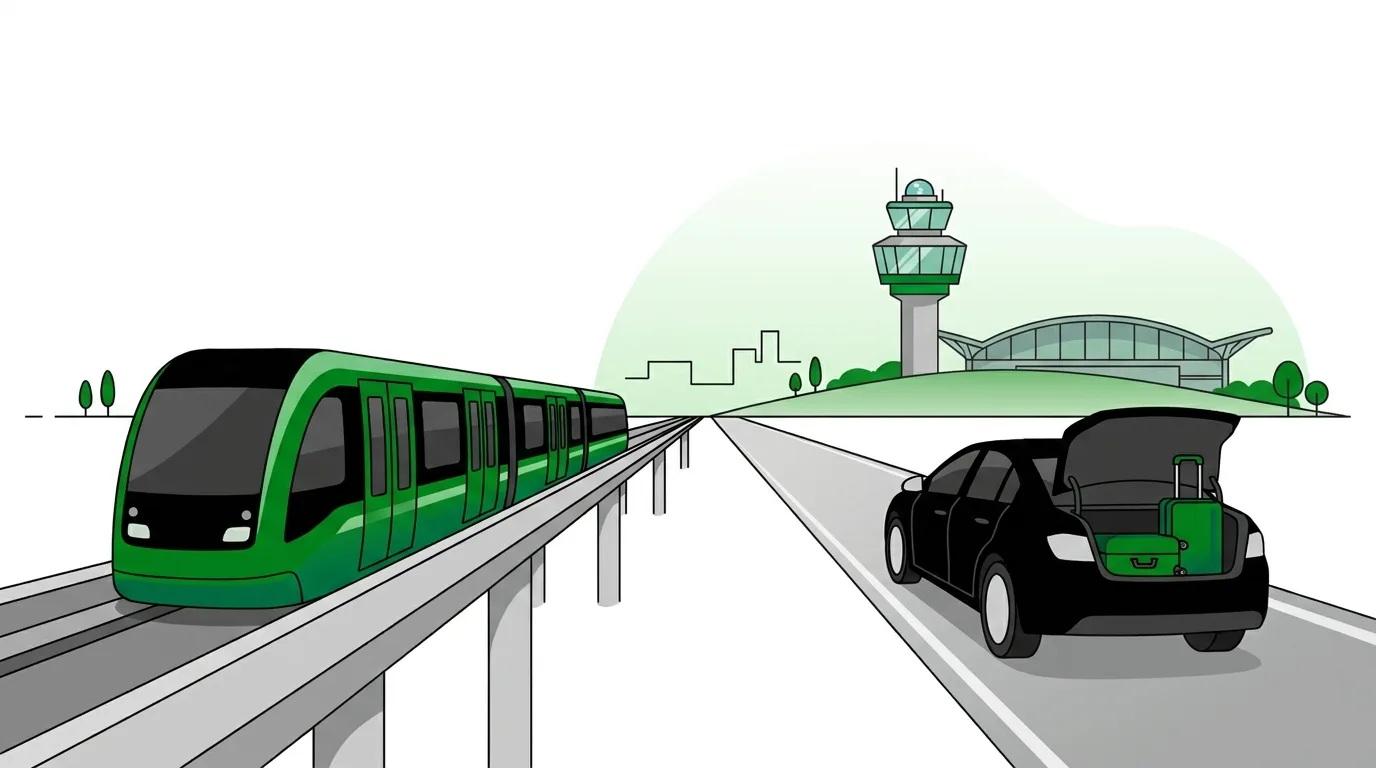
From an urban planning perspective, peer-to-peer carpooling was never meant to replace subways, regional trains, or city buses. Instead, shared private vehicles work alongside public transit to reduce overall dependence on single-occupant driving across sprawling metropolitan regions.
Many suburban neighbourhoods and campus corridors suffer from the first-mile and last-mile gap, where a commuter lives too far to walk to a regional rail station and local bus connections require multiple transfers. Sharing a ride to a major transit hub or carpooling directly between suburbs that lack direct rail links fills the exact gaps that fixed-route transit cannot economically cover.
Provincial investments in Ontario's carpool parking lots right beside major highway interchanges make it simple for commuters to meet up, leave an extra vehicle safely parked, and merge onto high-occupancy vehicle lanes together. Pairing those highway hubs with regional rail stations turns separate transport modes into one connected network.
Watch out: Always confirm your exact pickup landmark and waiting window in the app the evening before a morning trip, especially during winter weather.
Commuters get the most out of peer-to-peer carpooling when they apply it to specific regional travel patterns:
- Suburb-to-suburb commutes: Travelling directly between cities like Brampton, Markham, or Mississauga without routing through downtown Toronto first.
- Campus corridor trips: Connecting university and college students who travel between residential neighbourhoods and lecture halls on set days.
- First-mile station links: Sharing a quick morning ride to a major regional rail station rather than hunting for scarce station parking alone.
Start Sharing Your Daily GTA Commute Through FellaRide
When powered by modern matching tools, digital verification, and transparent cost sharing, carpooling offers an environmentally responsible and budget-friendly way to navigate Greater Toronto Area highways. Its scheduling trade-offs are real, yet data-driven platforms and clear commuter etiquette make those hurdles easier to manage every month.
Whether you want to offset the rising cost of maintaining your own car or need a comfortable seat for your morning classes and office days, joining a trusted local network puts better options within reach.
Getting started takes just a few practical steps:
- Download the mobile app: Set up your verified commuter profile on your phone so local drivers and passengers can recognise you.
- Enter your routine corridor: Post your upcoming drive or search for available seats along your usual highway or campus route.
- Coordinate and share the trip: Confirm your pickup landmark with your match and enjoy a calmer, more affordable commute across the region.